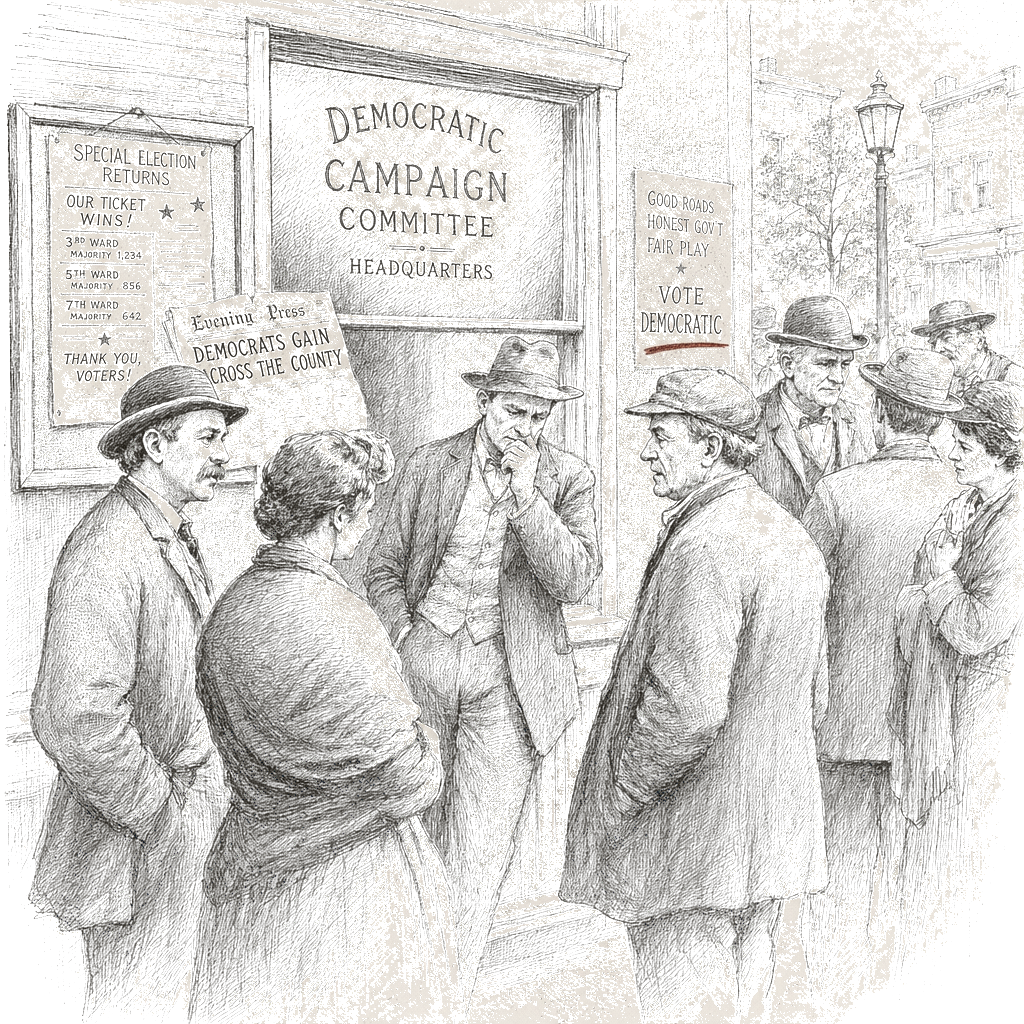
Many Democrats have grown discouraged about their own party even as Democratic candidates have recorded wins in recent special elections, according to an AP-NORC poll. The survey, released amid preparation for the midterm elections, found that while most Democrats still say they feel positively about the Democratic Party, fewer do so than they did after Trump’s 2024 election victory. The question of whether Democrats can turn that reduced goodwill into renewed support at the ballot box remains an open one, with the poll pointing to both potential advantages and lingering frustration.
In the AP-NORC findings, about 7 in 10 Democrats said they have a positive view of the Democratic Party. The report noted that Democrats’ overall positive feelings have not collapsed, but the favorability levels are lower than they have been in the past. It also said the midterm election campaign is still months away, meaning the current level of party favorability does not necessarily determine how voters will behave later this year.
The survey highlighted that the decline in Democratic party favorability followed Trump’s 2024 victory. It cited data showing Democrats’ favorability of their own party dropped after the election, falling from 85% in September 2024 to 67% in October 2025. The AP story also said Democrats’ favorability had not rebounded even after the party notched off-season special-election victories in November and continued with a string of wins afterward.
The AP-NORC poll also found the sentiment is not confined to one segment of Democrats. It said the diminished view of the Democratic Party in the AP-NORC polling appears consistent across Democrats’ age, race, ideology and education, suggesting that targeting a narrow group is not likely to fix the broader problem. The article added that other research points to similar frustration, including a separate Pew Research Center survey last fall that found about two-thirds of Democrats in September said their own party made them “frustrated,” compared with 4 in 10 Republicans.
Among frustrated Democrats, the AP story reported that about 4 in 10 said their party was not fighting hard enough against Trump, while about 1 in 10 said the party lacked good leadership or a cohesive agenda. The poll therefore suggests that dissatisfaction among Democrats may relate to perceived strategy and effectiveness against Trump rather than simply a dislike of Democratic leaders in general.
At the same time, the poll found Americans are not strongly positive about either party overall. It said roughly one-quarter of Americans have a negative view of both the Democratic Party and the Republican Party, with that double-negativity especially sharp among independents and people under 45. The AP-NORC data also showed that about half of U.S. adults only view one party positively, and only about 1 in 10 feel good about both parties.
The story said the shift against Democrats looks more recent than the overall long-term trend against the party in Gallup polling. It cited Gallup data showing that Americans’ sentiment toward Democrats turned against the party around 2010 and that unfavorable views became entrenched thereafter. It further said negative views of Democrats now rival the most negative points in time for Republicans, based on Gallup’s history of party favorability measures.
Despite the party-slump findings, the AP-NORC poll identified potential areas where Democrats may have leverage going into the midterm year. With health care featuring prominently among Americans’ priorities as costs and premiums rise, the article said Democrats hold a trust advantage on health care. It reported that about 35% of U.S. adults trust the Democrats to do a better job handling health care, compared with 23% for the Republicans, and that the figure was broadly in line with the last time the question was asked in October 2025.
The AP story said that on the economy and immigration—issues it described as central to Trump’s reelection—Republicans have lost some ground, but Democrats have not clearly benefited. It reported that about 31% of U.S. adults say Republicans are the party they trust to handle the economy, down slightly from 36% last year, and that Democrats did not make gains on that issue. On immigration, it said only about one-third of U.S. adults trust Republicans to handle immigration, described as an apparent decrease from 39% in October, with no corresponding benefit seen for Democrats.
The AP-NORC polling results were based on interviews with 1,156 adults conducted Feb. 5-8 using NORC’s probability-based AmeriSpeak Panel. The story said the margin of sampling error for adults overall was plus or minus 3.9 percentage points and plus or minus 6.0 percentage points for Democrats overall.