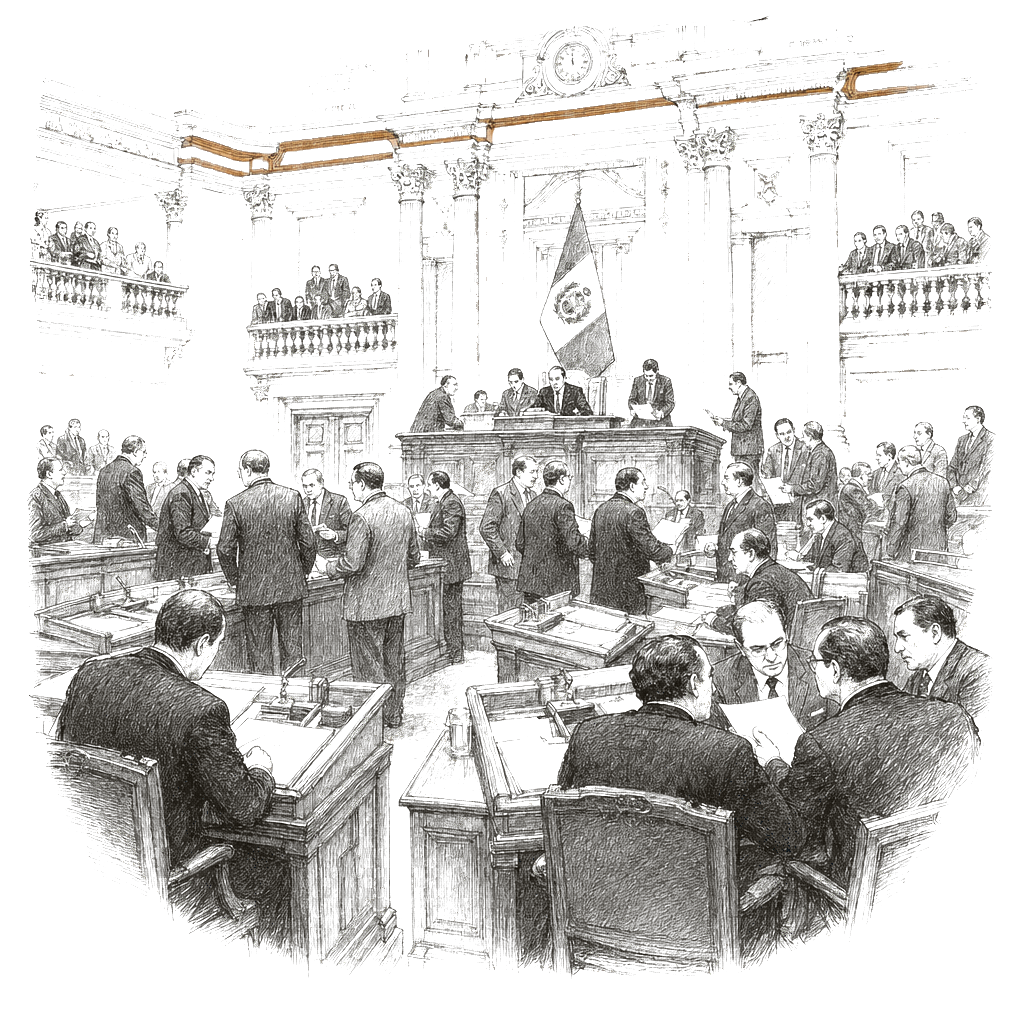
Peru’s Congress voted Tuesday to remove interim President José Jerí, setting off another shift in leadership just weeks before April 12 general elections. The vote, carried by lawmakers as Jerí faces a preliminary corruption investigation, comes as Peru reels from a prolonged political crisis and widening public frustration over violent crime.
Jerí’s removal took place with 75 votes in favor, 24 against and three abstentions, according to the legislative action described by Associated Press. Lawmakers said the change was triggered by allegations that Jerí engaged in corruption and influence peddling while serving as interim president.
The allegations are linked to a preliminary probe into Jerí and a series of undisclosed meetings he held with two Chinese executives, a case that began with a leaked report, according to the report. The leaked information pointed to a clandestine December meeting, and the two executives involved include one who holds active government contracts and another who is under investigation tied to alleged participation in an illegal logging operation.
Jerí has denied wrongdoing. He said he met the executives to organize a Peruvian-Chinese festivity, while opponents have argued the meetings amounted to corruption, according to the Associated Press account.
The legislative vote also reflects how Peru’s executive branch has become increasingly vulnerable to congressional pressure in recent years. Lawmakers have used corruption investigations and a constitutional clause allowing presidents to be removed if they are found “morally incapable,” a standard that legislators have interpreted broadly to unseat multiple presidents.
Under Peru’s rules for the interim period, lawmakers will select a new president from among their members to govern until July 28, when the interim leader is supposed to transfer power to the winner of the April election. Jerí will return to being a legislator after the change, and the new Congress will also take office when the July 28 handover occurs.
A vote to choose the interim president is scheduled for Wednesday, after lawmakers register their candidates, the report said. The process unfolds against a backdrop of a country that has had seven presidents since 2016, including Jerí’s own assumption of the interim role on Oct. 10 after predecessor Dina Boluarte was dismissed.
Jerí’s removal follows a pattern of political turnovers that has included Boluarte’s own ouster from office on “moral incapacity” grounds, with lawmakers citing the country’s high crime rate and corruption scandals. It also comes after Pedro Castillo, the leftist who won the 2021 election, was voted out of office in late 2022 following his attempt to dissolve Congress as he sought to skirt anti-corruption proceedings; Castillo later received an 11-year prison sentence for trying to overthrow Peru’s institutions.
In the election field ahead of April 12, Rafael López Aliaga, a conservative businessman and former mayor of Lima, is leading a crowded slate of candidates. Another prominent contender is Keiko Fujimori, a former legislator whose father was Peru’s president in the 1990s, with a runoff scheduled in June if no candidate wins an outright majority on April 12.
Despite the political instability, Associated Press said Peru’s economy has remained stable, citing public debt relative to gross domestic product of 32% in 2024 and pointing to government openness to foreign investment in areas such as mining and infrastructure. For now, however, the Congress’s vote marks yet another turning point for a country approaching a general election under intense scrutiny of corruption allegations and political conduct.