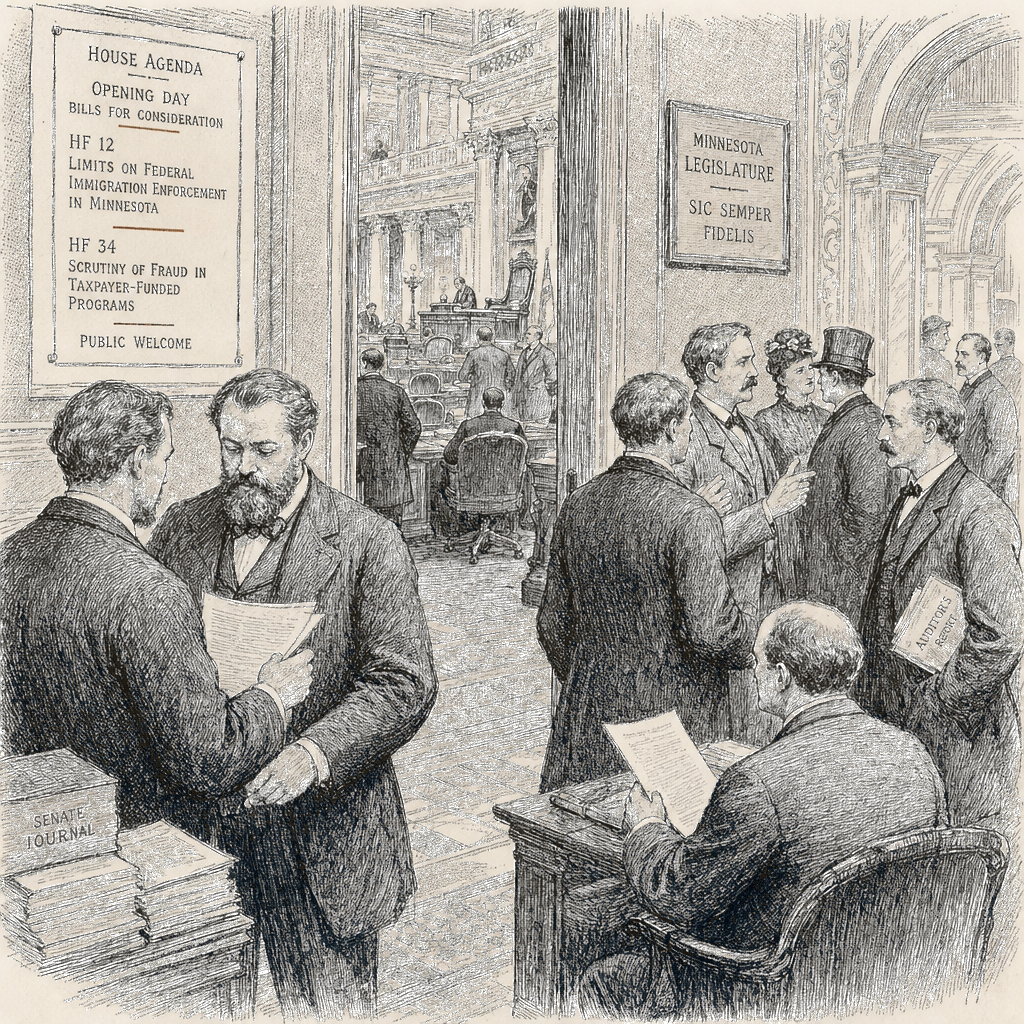
Minnesota’s Legislature began its session Tuesday amid competing plans over how the state should respond to a recent federal immigration enforcement surge, which federal officials have described as winding down but which lawmakers say has left lasting effects at the Capitol. Democrats, as the session gets underway through May, are pushing to curb what they view as the most damaging actions by federal immigration officers in Minnesota.
The politics are expected to be difficult from the start. Democrats hope to win bipartisan support despite a closely divided Legislature: the House is tied with a Republican speaker, and Democrats hold only a one-vote majority in the Senate. With all 201 legislative seats on the ballot in an election year, lawmakers from both parties are signaling that compromise will be necessary but not assured.
House Speaker Lisa Demuth said lawmakers would need bipartisan votes to move bills through committees and complete work for Minnesotans, even as priorities are expected to differ on both sides of the aisle. She also tied the election-year pressure to the campaign environment, noting she is running for governor and has expressed hope she will win President Donald Trump’s endorsement.
Democratic lawmakers also brought Capitol security changes into the new session, with tightened screening of visitors following the assassination of Democratic former House Speaker Melissa Hortman and her husband last summer. This session, all visitors now undergo weapons screening, according to the report.
A key Democratic focus is proposed restrictions aimed at federal immigration enforcement, even as federal border czar Tom Homan said over the weekend that more than 1,000 officers have left the Twin Cities area and that hundreds more would depart in the days ahead. Democrats’ package is framed as preventing federal officers from operating in sensitive community settings; House and Senate Democrats unveiled 11 bills that they said are meant to keep federal officers away from schools, childcare centers, hospitals and colleges.
Democrats’ bills would also require federal officers to display visible identification and would ban federal agents from wearing face masks, according to the legislation outlined at the outset of the session. The proposal package also includes a process element for state participation in certain investigations, including shootings involving federal agents, such as the deaths of Renee Good and Alex Pretti; the report said Minnesota remains frozen out of those cases and that the FBI officially notified the state Monday that it will not share information or evidence from its investigation into Pretti’s death.
Zack Stephenson, the top House Democrat, said Democrats do not expect Republican leaders to back the proposed enforcement restrictions but expressed hope some GOP lawmakers would break with their party. He described the recent surge as “exceptional” and “damaging” and said voters would hold officials accountable if they do not respond to what he said has happened during the last six weeks. Stephenson also acknowledged that any state restrictions targeting federal law enforcement would likely be challenged in court.
Republicans, by contrast, have expressed little enthusiasm for taking on federal immigration authorities and have said they would prefer to shift the focus toward fraud and misuse of taxpayer money. Rep. Harry Niska, the No. 2 House Republican, said Minnesotans want state and local law enforcement to cooperate with federal immigration enforcement.
One of Republicans’ top priorities is legislation to create an independent Office of Inspector General to investigate and prevent misuse of public funds. The Senate passed a similar proposal last year on a bipartisan 60-7 vote, while House Democratic leaders blocked a vote at the end of the session; Republicans said the measure remains alive this year. Republicans also want more accountability for agencies and officials who they say allowed fraud to happen on their watch.
The session’s opening coverage also included a separate federal court development involving a church protest in St. Paul, where an ICE official served as a pastor. Two of the nine people charged in the protest pleaded not guilty at a hearing before U.S. Magistrate Judge Douglas Micko, including independent journalist Georgia Fort and Trahern Crews, a co-founder of Black Lives Matter Minnesota. Other defendants who previously pleaded not guilty to civil rights charges included Don Lemon, the report said.
Fort told reporters and supporters afterward that she was exercising freedom of the press to cover the Jan. 18 protest at Cities Church while centering the voices of people she said otherwise would not be heard. She said in part that the case does not leave her just fighting for her freedom, and that she views it as the government trying to muzzle her so she is unable to report on what she called a historic case.