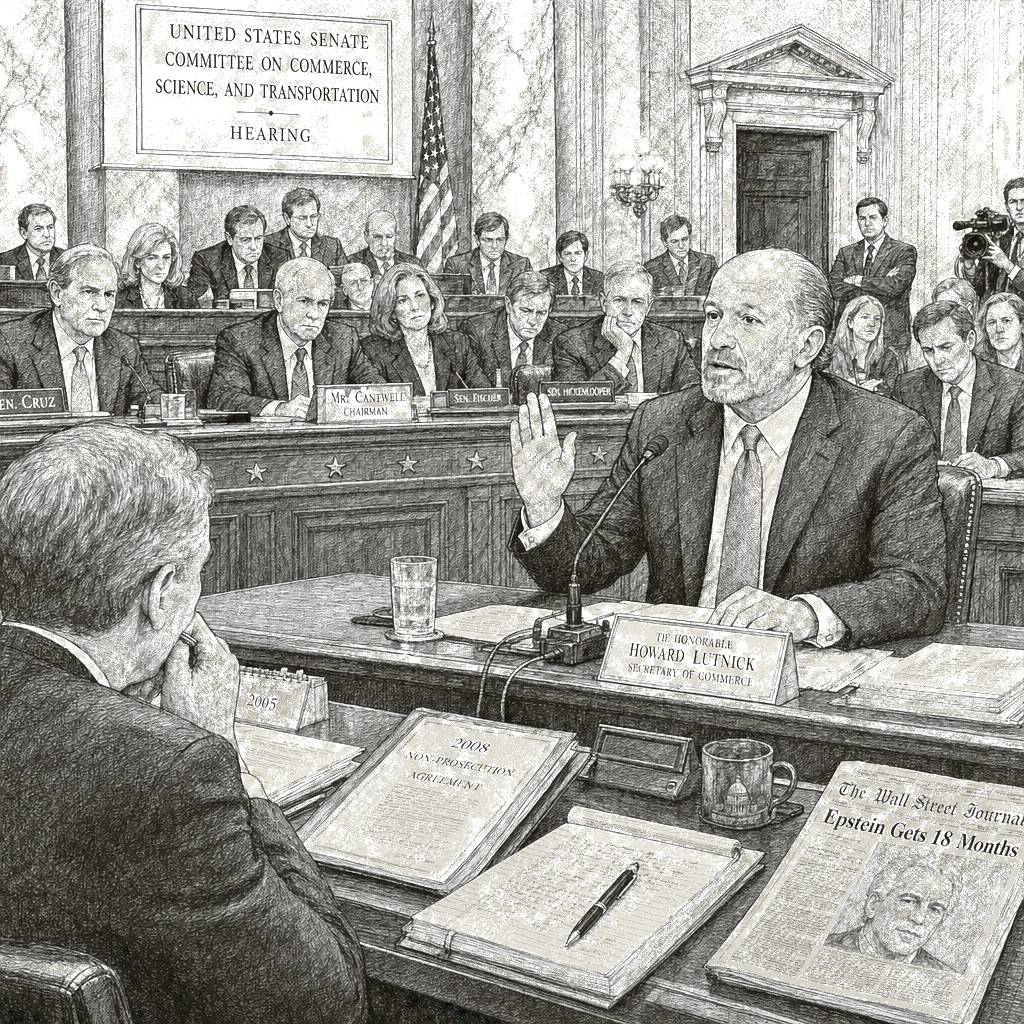
Lutnick’s admissions came during a Senate Appropriations Committee subcommittee hearing as Democrats pressed him to explain what he had said previously about his relationship with Epstein after Epstein’s 2008 conviction. Under questioning from Democrats on Tuesday, Lutnick acknowledged that he met with Epstein twice after the conviction—an account that conflicts with Lutnick’s earlier claim that he had cut ties with Epstein after 2005.
Lutnick told the hearing that he did not have “any relationship” with Epstein and said he “barely had anything to do with him,” describing their contact as a handful of emails and “a pair of meetings that were years apart.” The questions, however, were driven by lawmakers’ review of material described as part of the “Epstein files,” which Democrats said contradicted Lutnick’s prior account.
Democrats said the scrutiny intensified after the release of case files that they contend conflict with Lutnick’s claims from a podcast last year. In that earlier appearance, Lutnick said he had decided to “never be in the room” with Epstein again after a 2005 tour of Epstein’s home that he said disturbed him and his wife.
During Tuesday’s hearing, Lutnick’s more specific details included acknowledgments about dates. Lutnick told senators that he and his family had lunch with Epstein on Epstein’s private island in 2012, and that he also had an hour-long engagement at Epstein’s home in 2011—both after Epstein’s 2008 conviction.
Sen. Chris Van Hollen, a Democrat who questioned Lutnick, told him that the issue was not that Van Hollen saw evidence that Lutnick engaged in wrongdoing with Epstein, but instead that Lutnick allegedly misled the country and Congress based on earlier statements. Van Hollen said Monday that lawmakers needed documentation from Lutnick related to any ties to Epstein, adding that it was “absolutely essential” that he provide Congress with the documents before they could decide next steps. Lutnick responded that he would consider the request and said he had “nothing to hide.”
While Democrats pressed for documents and accountability, Senate Republicans also signaled concern. Sen. Roger Wicker said the 2012 private-island visit “would raise questions,” and Sen. Thom Tillis said he was “concerned” about what Lutnick had done and when. Senate Majority Leader John Thune did not name Lutnick directly, but said those mentioned in the Epstein files are “going to have to answer questions around that,” adding that the public would judge whether the answers were sufficient.
Tillis said he was not calling for Lutnick’s resignation at that moment, but argued that Lutnick would be serving himself by “laying out exactly what did and what did not happen” across the relationship that lawmakers described as including business entanglements. He framed the disclosure as a way to respond to the questions raised by the materials.
Separately, lawmakers in the House continued pushing for Lutnick to step down. Republican Rep. Thomas Massie of Kentucky called for Lutnick’s resignation over the weekend after emails were released that alluded to meetings between Lutnick and Epstein. Rep. Ro Khanna, a California Democrat, joined Massie in pressuring Lutnick out of office on Monday, saying, “Based on the evidence, he should be out of the Cabinet,” and adding in remarks reported during Monday’s push for resignation that the country faced a choice about whether powerful people would “skate.”
In response to the growing calls for resignation, the White House defended Lutnick’s position. White House press secretary Karoline Leavitt said Tuesday that Lutnick “remains a very important member of President Trump’s team, and the president fully supports the secretary.”
The hearing and related disputes reflect a wider push by U.S. lawmakers to determine what accountability should look like in the aftermath of the disclosures and whether Lutnick’s statements to Congress aligned with the case files that have been made public.