Body
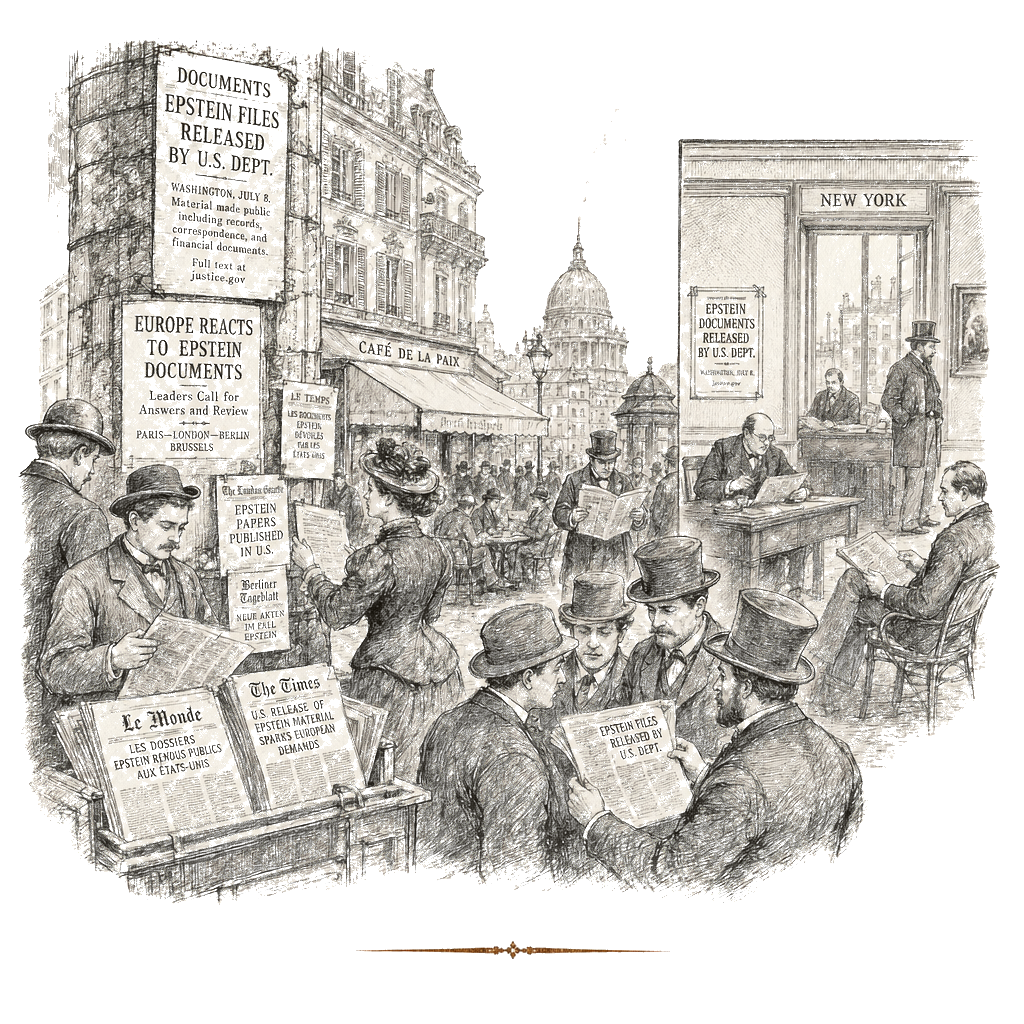
Newly released records about Jeffrey Epstein, published after the U.S. Justice Department released a “huge trove” of documents, have shaken European political and social elites, with headlines, investigations and career outcomes cascading through multiple countries. The Epstein-related fallout has been described as far more prominent in Europe than in the United States, where repercussions reported publicly so far have been more muted.
In London, the files have landed in the middle of a political storm tied to Britain’s handling of Peter Mandelson, the former U.K. Ambassador to Washington. The documents contributed to Mandelson’s firing and raised questions for Prime Minister Keir Starmer about the ambassador appointment, which lawmakers and police scrutiny now threaten to extend into allegations of misconduct connected to sensitive information.
The wider European pattern, as described in the reporting, is that the most prominent figures hit by the files have not been publicly linked to new claims of sexual wrongdoing. Instead, many have been toppled for maintaining friendly relationships with Epstein after he became a convicted sex offender, as the revelations about continued contact and proximity to Epstein have emerged from the released correspondence and documents.
In the United Kingdom, the repercussion picture includes former Prince Andrew, who had paid millions to settle a lawsuit with one of Epstein’s victims and is facing pressure to testify in the U.S., along with Sarah Ferguson, whose charity shut down this week. The same reporting said Mandelson had downplayed his relationship with Epstein despite having called him “my best pal” in 2003, and that the new files show contact continued for years after Epstein’s 2008 prison term for sexual offenses involving a minor. The report also described a July 2009 message in which Mandelson appeared to refer to Epstein’s release from prison as “liberation day.”
After Mandelson was fired in September over earlier revelations involving his Epstein ties, Britain’s police began investigating whether Mandelson committed misconduct in public office by passing on sensitive government information to Epstein. Starmer, according to the reporting, apologized to Epstein’s victims and pledged to release public documents that would show Mandelson lied when he was vetted for the ambassador job, while lawmakers pushed for Starmer to remain in office despite the backlash over the appointment’s handling.
The files’ impact has also extended beyond Britain’s government into other elite circles. In Norway, for example, the reporting said the country’s economic crimes unit opened a corruption investigation into former Prime Minister Thorbjørn Jagland, who also once headed the Nobel Peace Prize committee, over ties with Epstein, and that Jagland’s lawyer said he would cooperate with the probe.
In Norway’s public diplomacy sphere, the reporting named diplomat couple Terje Rød-Larsen and Mona Juul, saying Juul was suspended as Norway’s ambassador to Jordan after revelations that included a claim that Epstein left the couple’s children $10 million in a will drafted shortly before Epstein’s 2019 death in a New York prison. The report added that Norway’s respect for its royal family has been dented by new details about Epstein’s friendship with Crown Princess Mette-Marit and that the princess apologized “to all of you whom I have disappointed.”
Across Europe, the reporting said multiple governments had moved beyond individual career shakeups into broader inquiries. It described investigations in Latvia, Lithuania and Poland, with Poland’s Prime Minister Donald Tusk saying a team would review the files for potential Polish victims and examine any links between Epstein and Russian secret services. In Sweden, a Swedish U.N. official named Joanna Rubinstein quit after a 2012 visit to Epstein’s Caribbean island was revealed, and in Slovakia, Miroslav Lajcak resigned after communications with Epstein were disclosed, including a discussion that referenced “gorgeous” girls.
The reporting also presented experts saying the documents show how far Epstein’s network reached into Europe’s power structure. Mark Stephens, a specialist in international and human rights law at Howard Kennedy in London, said, “Epstein collected powerful people the way others collect frequent flyer points,” adding that “the receipts are now in public.” Another expert, Rob Ford of the University of Manchester, said that in Britain “if you’re in those files, it’s immediately a big story,” and argued that the disclosures suggested a more functional media and accountability structure, including a sense of shame in politics around what is “just not acceptable” and “just not done.”
While the European account emphasized a wave of sanctions and investigations, the report described the U.S. aftermath as less sweeping so far. It said a few high-profile Americans had faced repercussions, including former U.S. Treasury Secretary Larry Summers, who went on leave from academic positions at Harvard University late last year, and Brad Karp, who quit as chair of law firm Paul Weiss after revelations in the latest batch of documents.
The reporting also said the National Football League would investigate Epstein’s relationship with New York Giants co-owner Steve Tisch after emails that exchanged messages about possible dates with adult women became part of the disclosures. It noted that other U.S. figures connected to Epstein have not yet faced severe sanction in the reporting so far, including former Trump strategist Steve Bannon, Commerce Secretary Howard Lutnick and tech billionaire Elon Musk, while emphasizing that neither Trump nor Bill Clinton had been accused of wrongdoing by Epstein’s victims.
The report also described context for why public accountability might diverge between the U.S. and Britain, quoting Alex Thomas of the Institute for Government, who suggested that parliamentary democracy’s need for a prime minister to retain Parliament’s confidence can drive accountability. The filings, in his view, met a structural demand for officials to answer to elected representatives, even as experts cautioned that Britain’s response should not be treated as automatic or singular.
Finally, European political inquiry in the reporting was paired with attention to possible influence on policymaking. Grégoire Roos, director of the Europe program at Chatham House, said the files reveal Epstein’s “far-reaching” network of contacts in Europe and the level of access among those who were already powerful and those “who were getting there,” and that it would be “interesting to see whether in the correspondence he had an influence in policymaking.”