Body
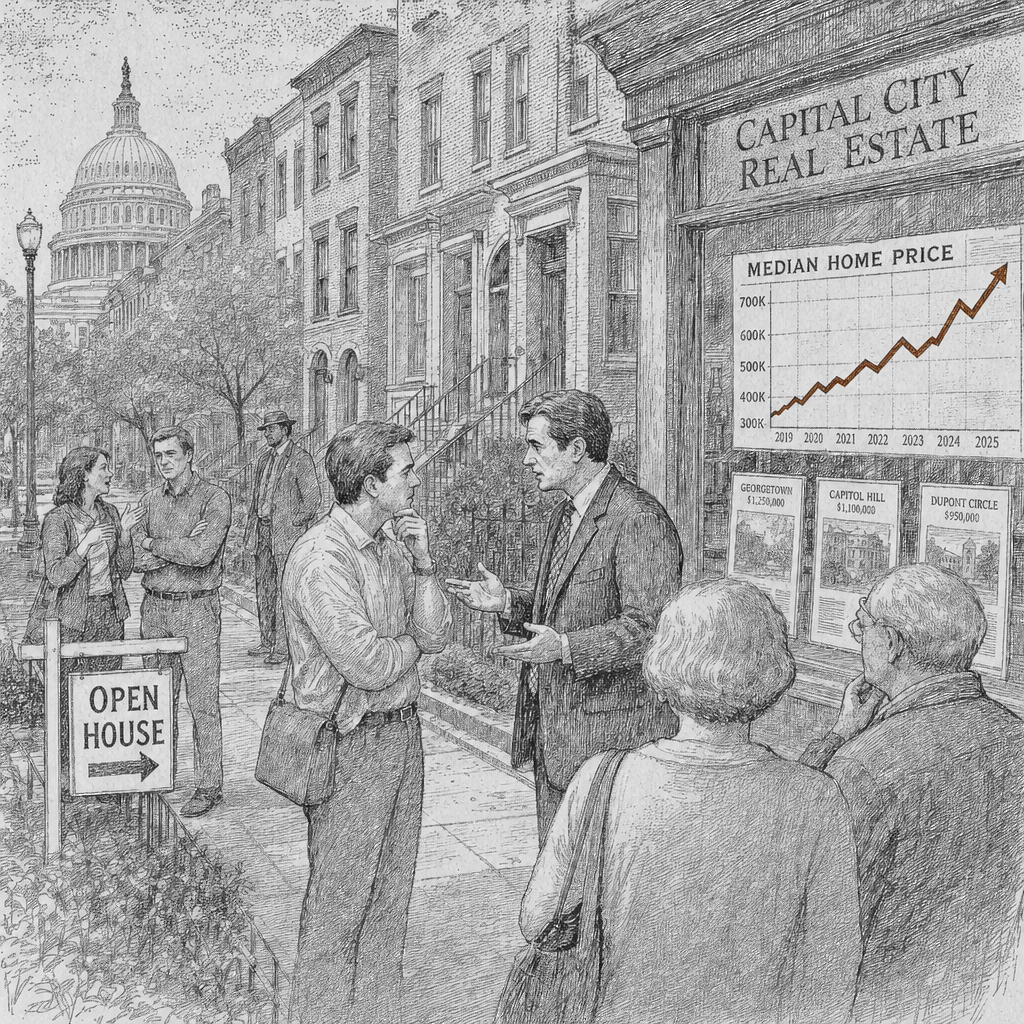
President Donald Trump has put his housing policy message on home values rather than affordability through new supply, arguing that letting prices fall would hurt owners while Republicans weigh how to perform in the November midterm elections. In an approach that critics say ignores the steps economists and local officials describe as necessary to improve access, Trump has argued for policies that protect existing homeowners as home prices remain a key driver of costs.
Trump’s position stands in contrast to calls to increase construction so more people can afford to buy, a gap that renters, builders and apartment dwellers say has worsened. Many economists and real estate industry voices have said ramping up housing supply is needed to address a large share of the affordability problem, even as voters have consistently rated housing affordability as a top concern.
Trump made the case directly to his Cabinet, saying, “I don’t want to drive housing prices down. I want to drive housing prices up for people that own their homes, and they can be assured that’s what’s going to happen,” according to a quote attributed in the Associated Press report. He added, “You have a lot of people that have become wealthy in the last year because their house value has gone up,” and warned that “when you get the housing — when you make it too easy and too cheap to buy houses — those values come down.”
The political appeal for Trump’s approach, as described by the AP, rests with older homeowners who generally vote at higher rates than younger people in midterm contests. In the 2024 presidential election, the report says 81% of Trump’s voters were homeowners, based on AP VoteCast data, which it says may blunt housing’s urgency for part of his existing coalition because many supporters either have mortgages with low rates or own outright.
However, the same electoral math that favors homeowners can raise risk with younger voters who are more likely to face higher entry costs as renters or would-be buyers. Brent Buchanan, whose polling firm Cygnal advises Republicans, said the under-40 group is especially important and argued that if younger voters conclude Trump is taking care of boomers at their expense, it could “hurt Republicans,” according to the AP report.
Housing supply is also central to the policy dispute. The AP report said pending construction has fallen under Trump and cited U.S. Census Bureau data showing that permits to build single-family homes plunged 9.4% over the past 12 months in October to an annual rate of 876,000. The report described the view from the ground as well, with Shay Hata, a real estate agent operating in the Chicago and Denver areas, saying many listings attract “between five and 20 offers” in suburban markets due to limited inventory.
Hata and other voices in the AP report described how additional building could improve affordability by changing mortgage-rate options through builder-linked channels, noting that in some cases buyers qualify for discounted mortgage rates from preferred lenders. She called the current condition “very discouraging for buyers because they’re getting priced out of the market,” a framing that ties housing affordability to both prices and the availability of new options.
Trump’s housing approach has shifted from earlier campaign messaging that included expanding home availability. During the 2024 campaign, his team said Trump would create tax breaks for homebuyers, trim regulations on construction, open federal land for developments, and cut mortgage rates to make monthly payments more manageable, the AP report said, along with an assertion that deportation efforts would expand housing stock.
As recently as October, Trump urged builders to increase construction, posting on social media that, “They’re sitting on 2 Million empty lots, A RECORD. I’m asking Fannie Mae and Freddie Mac to get Big Homebuilders going and, by so doing, help restore the American Dream!” The AP report said that more recent position has been to oppose policies that would boost supply and lower prices, even as affordability concerns persist.
In office, the AP report said Trump has focused housing policy on seeking lower mortgage costs and supporting programs that affect mortgage financing. It cited Trump’s lobbying of the Federal Reserve to cut its benchmark interest rates, and said he also announced that the two mortgage companies in government conservatorship would buy at least $200 billion in home loan securities as a bid to reduce rates. The report also said Trump wants Congress to ban large financial institutions from buying homes, and that he has rejected suggestions to allow buyers to use 401(k) retirement accounts for down payments.
Even with those efforts, several analysts cited in the AP report argued that home prices have been rising faster than incomes for years, making it harder for families to save for down payments or move up. The report said a home is increasingly treated as a primary financial asset for families, and it warned that if economic growth boosts demand for housing, price increases could intensify the affordability problem.
Still, Edward Pinto, described by the AP as a senior fellow at the American Enterprise Institute, argued that fears of falling home prices were likely unwarranted. He said that construction of single-family homes would have to rise by 50% to 100% during the next three years for average home price gains to be flat, and added, “It’s very hard to crater home prices,” according to the report.
In the background, housing price momentum remains an important part of the affordability debate. Using vintage FRED data from this article’s publish date, the Case-Shiller U.S. national home price index rose 1.3793484296719387 year over year as of Feb. 8, 2026, underscoring the broader challenge Trump and challengers are addressing with competing supply-and-demand strategies.