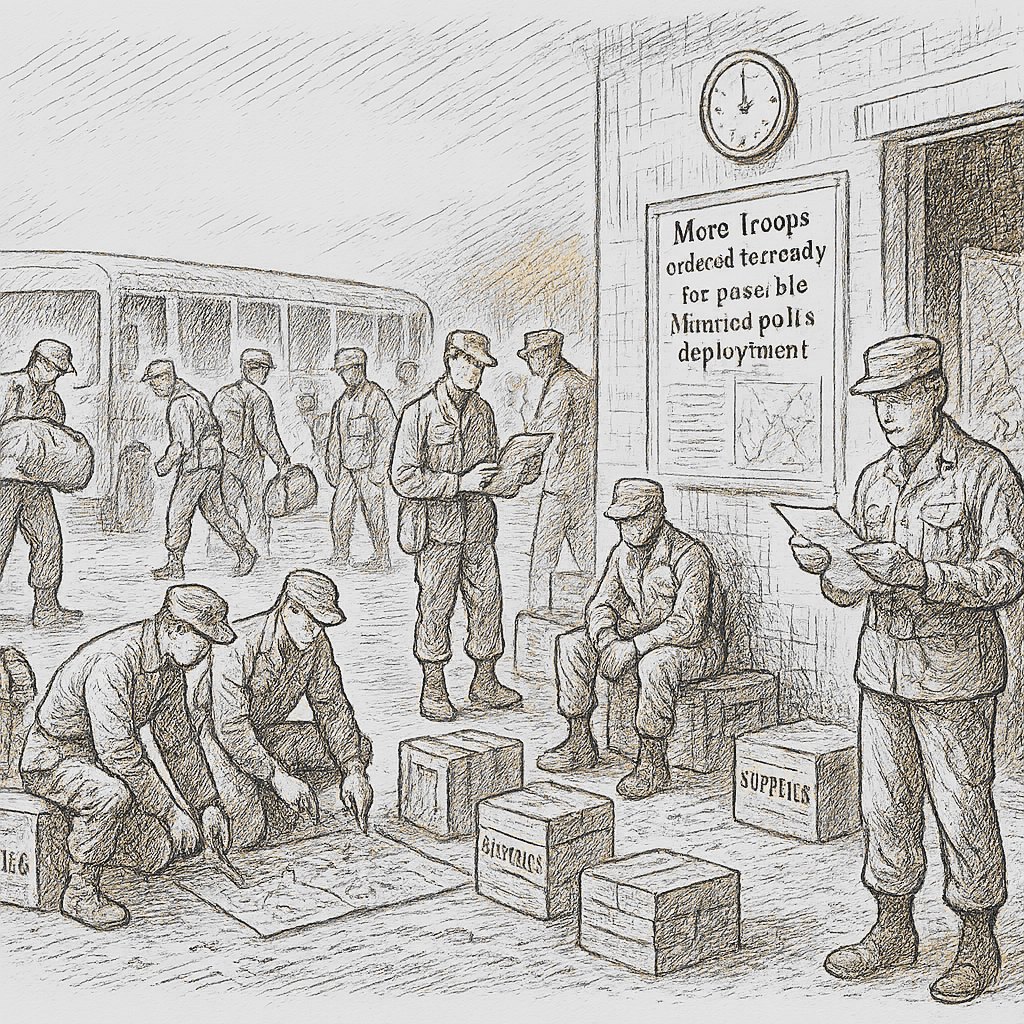
The U.S. Army has ordered additional active-duty soldiers to prepare for a possible deployment to Minneapolis if needed, according to a defense official who spoke on condition of anonymity to discuss sensitive planning. The announcement came amid protests in the Twin Cities region linked to the Trump administration’s immigration enforcement crackdown.
In the preparations described by the official, members of an Army military police brigade stationed at Fort Bragg in North Carolina received “prepare-to-deploy orders,” with the official saying that such standby orders are issued regularly. The official also said that if troops were deployed, they would likely support civil authorities in Minneapolis, but that the orders do not necessarily indicate that soldiers would ultimately be sent.
The defense official further said that about 1,500 active-duty soldiers from the Army’s 11th Airborne Division based in Alaska received similar standby orders. Taken together, the preparations point to a federal contingency plan for the city as demonstrations have continued around the latest high-profile clash between federal immigration enforcement and residents.
The backdrop includes protests that erupted in Minneapolis after a federal immigration officer killed resident Renee Good on Jan. 7, according to the account in the report. The official said President Donald Trump had threatened to invoke the Insurrection Act, a rarely used 19th century law that would allow active-duty troops to be used as law enforcement.
Trump later appeared to walk back that threat, telling reporters the next day that there was not a reason to use the act “right now.” In the report, Trump added, “If I needed it, I’d use it,” describing it as “very powerful.” When asked about the latest orders, the Pentagon said it did not have information to provide at the time.
Minnesota Gov. Tim Walz urged Trump to refrain from sending more troops and, in a statement Tuesday, invited him to visit Minnesota and “help restore calm and order and reaffirm that true public safety comes from shared purpose, trust, and respect.” Walz has been a frequent target of Trump.
The report situates the planning orders within Trump’s broader use of federal military support in American cities during his second term, describing deployments that have often drawn objections from local officials. It cited Trump deploying federalized National Guard troops to Los Angeles last June after protests broke out following a blitz of immigration arrests, and later sending about 4,000 Guard members and 700 active-duty Marines to guard federal buildings and protect federal agents during immigration arrests.
It also described Trump mobilizing Guard troops in places including Chicago and Portland, Oregon, while noting he said in December he was dropping that push for the time being.