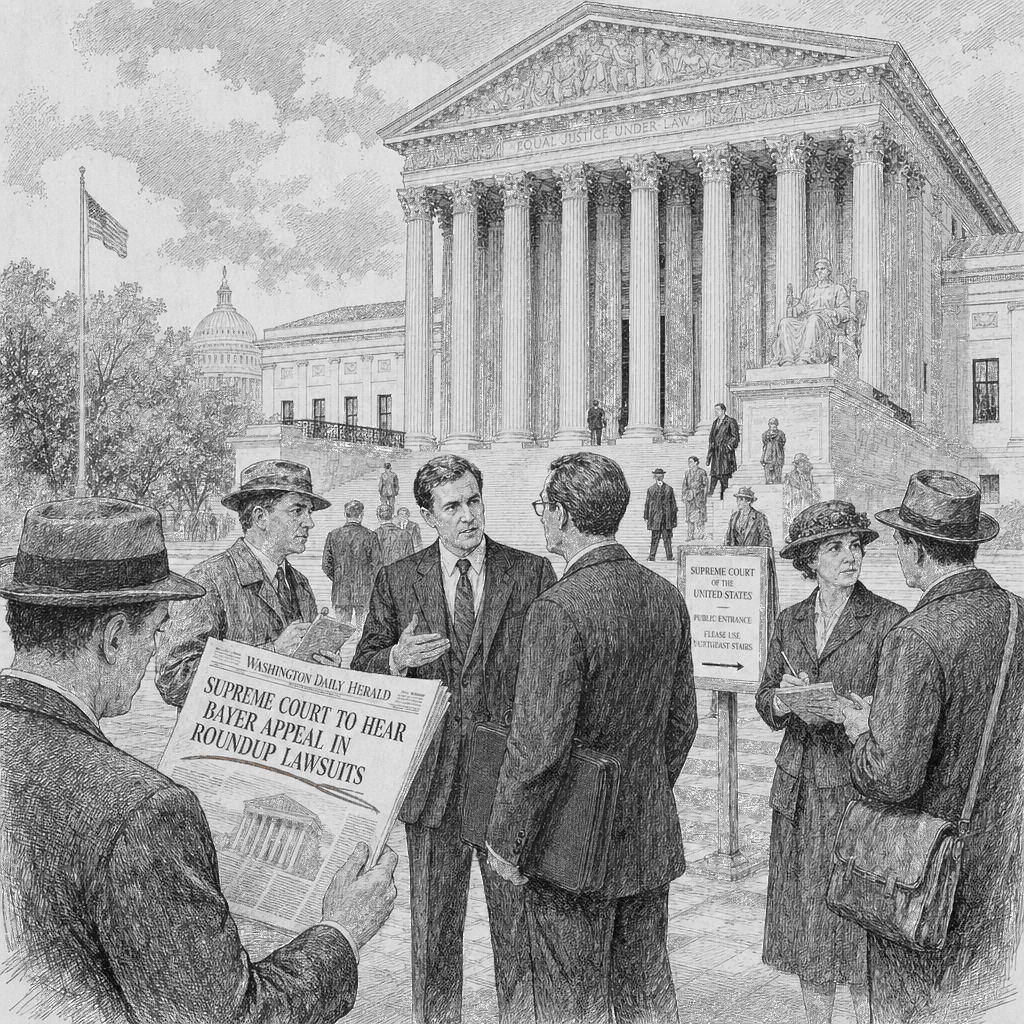
The U.S. Supreme Court agreed Friday to hear an appeal by Bayer aimed at blocking thousands of state lawsuits alleging the company failed to warn that its popular Roundup weedkiller could cause cancer.
The justices will consider whether Environmental Protection Agency approval of Roundup without a cancer warning should rule out the state court claims, according to the Associated Press. The case comes from Missouri, where a jury awarded $1.25 million to a man who developed non-Hodgkin’s lymphoma after spraying Roundup on a community garden in St. Louis.
Bayer disputes the cancer allegations and has set aside $16 billion to settle cases, the AP reported. Bayer has also been urging states to enact laws barring the lawsuits, and Georgia and North Dakota have done so, the report said.
The Biden and Trump administrations have taken different approaches to the issue, according to the AP. The Trump administration weighed in on Bayer’s behalf, reversing the Biden administration’s position, and that shift has put it at odds with some supporters of the Make America Healthy Again agenda who oppose giving the company the legal immunity it seeks, the report said.
Some studies associate Roundup’s key ingredient, glyphosate, with cancer, the AP said. The EPA has said it is not likely to be carcinogenic to humans when used as directed.
Bayer faces about 181,000 Roundup claims, mostly from residential users, the AP reported. The company has stopped using glyphosate in Roundup sold in the U.S. residential lawn and garden market, but glyphosate remains in agricultural products. The weedkiller is designed to be used with genetically modified seeds—including corn, soybeans and cotton—that resist Roundup’s effect, the AP said.
The Supreme Court previously declined to take up a similar Bayer challenge in 2022 in a California case in which a jury awarded more than $86 million to a married couple, the AP reported. In 2024, the 3rd U.S. Circuit Court of Appeals ruled in Bayer’s favor, and Bayer argues the high court should intervene because lower courts have issued conflicting rulings, the AP said.
Bayer CEO Bill Anderson said, “It is time for the U.S. legal system to establish that companies should not be punished under state laws for complying with federal warning label requirements,” in a statement cited by the AP. Environmental health director Lori Ann Burd of the Center for Biological Diversity said, “It’s a sad day in America when our highest court agrees to consider depriving thousands of Roundup users suffering from cancer of their day in court,” according to the report.
Environmental groups said Bayer wants to keep juries out of the lawsuits because it has been losing in state courts, the AP reported. The AP also said it is unclear whether the justices will hear the case in the spring or at the start of the next court term in October, and that Bayer has said it might have to consider pulling glyphosate from U.S. agricultural markets if the lawsuits persist.