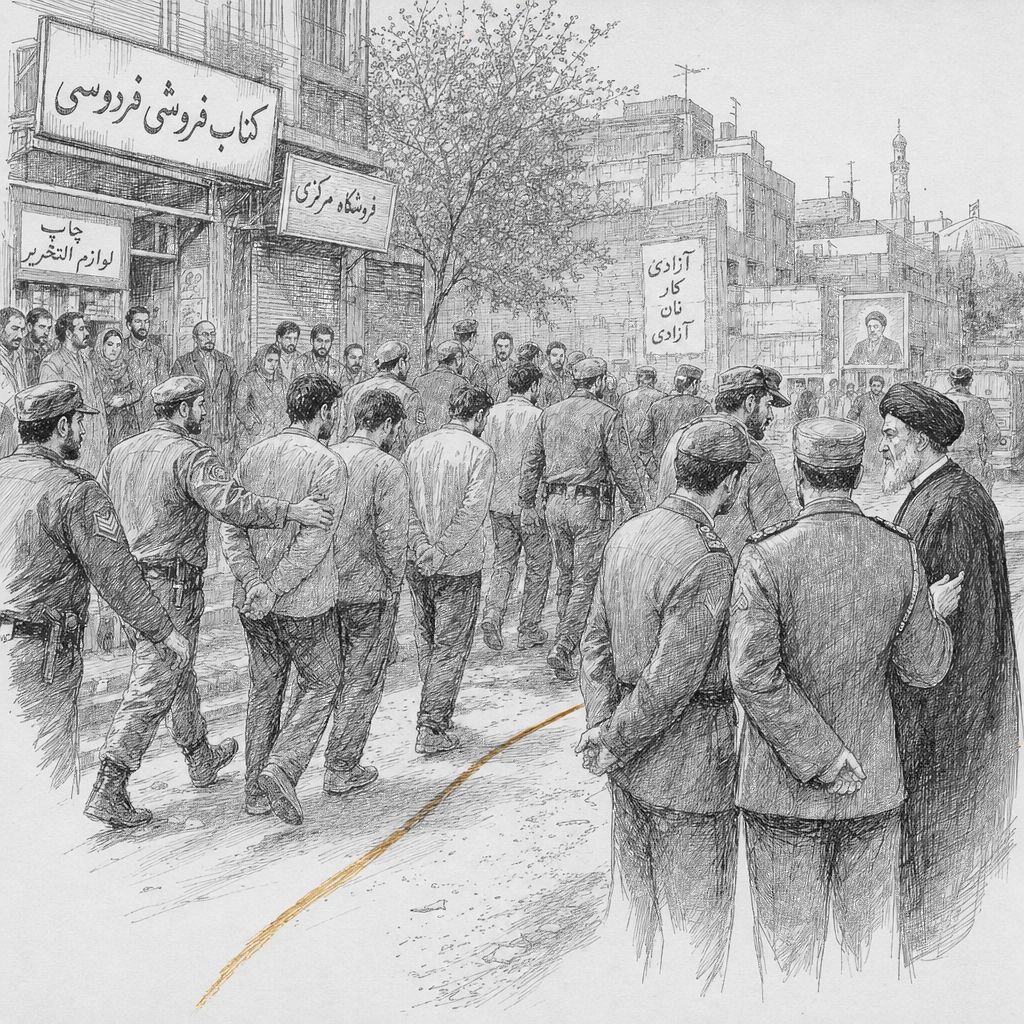
Khatami’s sermon came as Trump struck a conciliatory tone in Washington, thanking Iran’s leadership for not executing hundreds of detained protesters — a signal that the prospect of U.S. military intervention may be receding. The death toll from the crackdown on demonstrations that directly challenged Iran’s theocracy stood at 3,090 as of Friday, according to the U.S.-based Human Rights Activists News Agency; the AP could not independently confirm the figure.
DUBAI — A senior hard-line cleric in Iran called Friday for the death penalty for detained protesters and threatened U.S. President Donald Trump and Israeli Prime Minister Benjamin Netanyahu, even as the wave of demonstrations that began Dec. 28 appeared to have receded.
Ayatollah Ahmad Khatami, a member of Iran’s Assembly of Experts and Guardian Council, made the demand in a sermon carried live on Iranian state radio. Worshippers responded with chants of “Armed hypocrites should be put to death!”
Khatami described protesters as the “butlers” of Netanyahu and “Trump’s soldiers,” and warned the two leaders to await “hard revenge from the system.” He said “Americans and Zionists should not expect peace.”
Trump, speaking to reporters in Washington, took a different tone. “Iran canceled the hanging of over 800 people,” Trump said. “I greatly respect the fact that they canceled.”
The death toll from the crackdown stood at 3,090 as of Friday, according to the U.S.-based Human Rights Activists News Agency, which said it relies on a network of activists inside Iran who confirm all reported fatalities. The AP was unable to independently confirm that figure. Iran’s government has not provided casualty figures.
Calm in Tehran, blackout continues
No new demonstrations had been reported in Tehran for several days as of Friday, with shopping and street life returned to outward normality, according to the AP. Authorities reported no unrest elsewhere in the country.
A week-old internet blackout remained in effect. Some Iranians crossed into Turkey to communicate with the outside world. At a border crossing in Turkey’s eastern Van province, a Turkish businessman who had been in Tehran when the protests erupted described what he heard from his hotel before he was forced to move to a customer’s home.
“The guns they were firing were not simple weapons,” said Mehmet Önder, 47. “They were machine guns.”
The protests began Dec. 28 over Iran’s ailing economy and expanded into demonstrations directly challenging the country’s theocracy, according to AP reporting. Harsh repression followed.
Diplomatic pressure mounts
Russian President Vladimir Putin spoke Friday with Iranian President Masoud Pezeshkian and with Netanyahu, Kremlin spokesman Dmitry Peskov said, as governments on multiple sides sought to prevent further escalation.
One diplomat told the AP that senior officials from Egypt, Oman, Saudi Arabia and Qatar had raised concerns directly with Trump that a U.S. military intervention in Iran would shake the global economy and destabilize an already volatile region.
Exiled prince calls for resumed protests
Exiled Crown Prince Reza Pahlavi, whose father was overthrown in Iran’s 1979 Islamic Revolution, said in Washington that he still believes Trump will deliver on earlier promises of support to demonstrators.
“I believe the president is a man of his word,” Pahlavi told reporters. He added that “regardless of whether action is taken or not, we as Iranians have no choice to carry on the fight.”
“I will return to Iran,” Pahlavi vowed. Hours later, he called on protesters to take to the streets again from Saturday through Monday.
Damage claims and regional spillover
Khatami offered what he described as the first overall statistics on damage from the protests, claiming 350 mosques, 126 prayer halls and 20 other holy sites had sustained damage. He said 80 homes of Friday prayer leaders — figures central to Iran’s theocratic structure — were also damaged. He also claimed damage to 400 hospitals, 106 ambulances, 71 fire department vehicles and 50 other emergency vehicles.
The Kurdistan Freedom Party, a Kurdish separatist group based in Iraq known by its acronym PAK, said it had launched attacks on Iran’s paramilitary Revolutionary Guard in retaliation for the crackdown. A party representative said its members had “played a role in the protests through both financial support and armed operations to defend protesters when needed,” according to the AP.