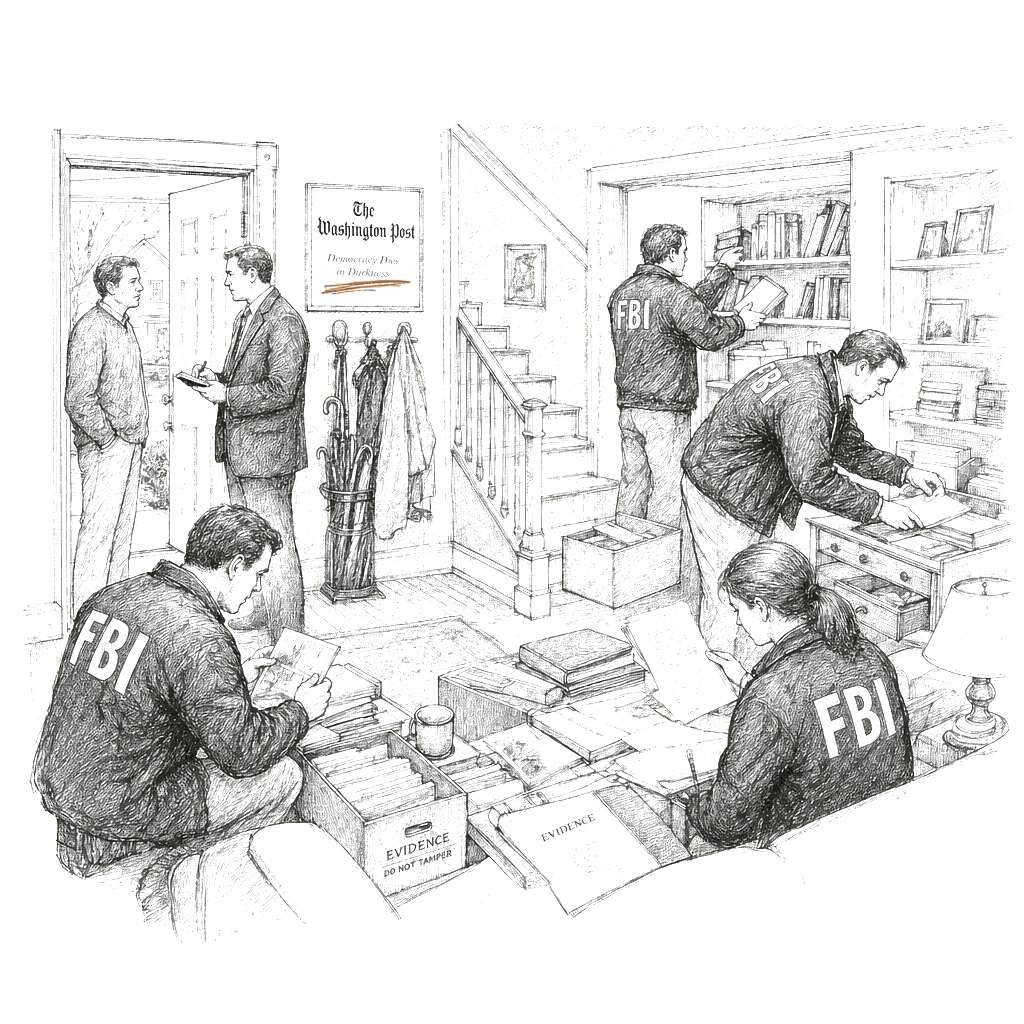
FBI agents searched Washington Post reporter Hannah Natanson’s home in Virginia on Wednesday as part of a leak investigation involving classified documents, the Justice Department said.
The Justice Department described the case as stemming from a broader inquiry into alleged theft of classified material by a Pentagon contractor, and said the search was conducted at the request of the Defense Department. The Post reported that agents seized Natanson’s phone, two laptops and a Garmin watch during the search of her home.
Justice Department officials told the Post that Natanson and the newspaper were not targets of the investigation, according to an email to colleagues from Matt Murray, the Post’s executive editor. Murray said the action raised concerns about constitutional protections for press work and argued that the newspaper would stand by its longstanding support for robust press freedoms.
Attorney General Pam Bondi said the search was part of a response to leaks, saying it was carried out at the request of the Defense Department and referring to the journalist as “obtaining and reporting classified and illegally leaked information from a Pentagon contractor.” White House press secretary Karoline Leavitt said in a post on X that the search reflected the administration’s “zero tolerance” for leaks.
The warrant described the investigation as tied to a system engineer and information technology specialist for a government contractor in Maryland, authorities allege took home classified materials. Court papers previously described Aurelio Perez-Lugones as having been charged earlier this month with unlawful retention of national defense information, and they did not describe a charge or court allegation focused on leaking classified information.
According to court filings cited by the Post, Perez-Lugones held a top secret security clearance and was accused of printing classified and sensitive reports at work. During searches earlier this month of his Maryland home and car, authorities found documents marked “SECRET,” including one in a lunchbox, the Post reported.
An FBI spokesperson declined to comment on Wednesday, and the Post said it was monitoring and reviewing the situation. An email seeking comment was sent to lawyers for Perez-Lugones, who the Post said is expected to appear in court on Thursday for a detention hearing.
First Amendment and press-freedom advocates expressed alarm about the raid on Natanson. Bruce Brown, president of the Reporters Committee for Freedom of the Press, said that physical searches of reporters’ devices, homes and belongings are among the most invasive investigative steps law enforcement can take and warned that the move could represent “a tremendous escalation” in government intrusions into press independence.
The case also comes against the backdrop of Justice Department policies aimed at how prosecutors seek evidence from news media in leak investigations. The Justice Department previously revised internal policy in April, according to the AP report, when Bondi rescinded a Biden-era policy that had protected journalists from having their phone records secretly seized during leak investigations—an approach news organizations and press-freedom groups had long criticized.
The AP report said Bondi’s memo described press members as “presumptively entitled to advance notice” of certain investigative activities and said subpoenas should be narrowly drawn, while warrants should include “protocols designed to limit the scope of intrusion into potentially protected materials or newsgathering activities.” In contrast to other handling of sensitive information, the report also pointed to a separate Signal chat episode last spring that involved senior Trump administration officials, in which a reporter was mistakenly added and Bondi said she was disinclined to open an investigation.