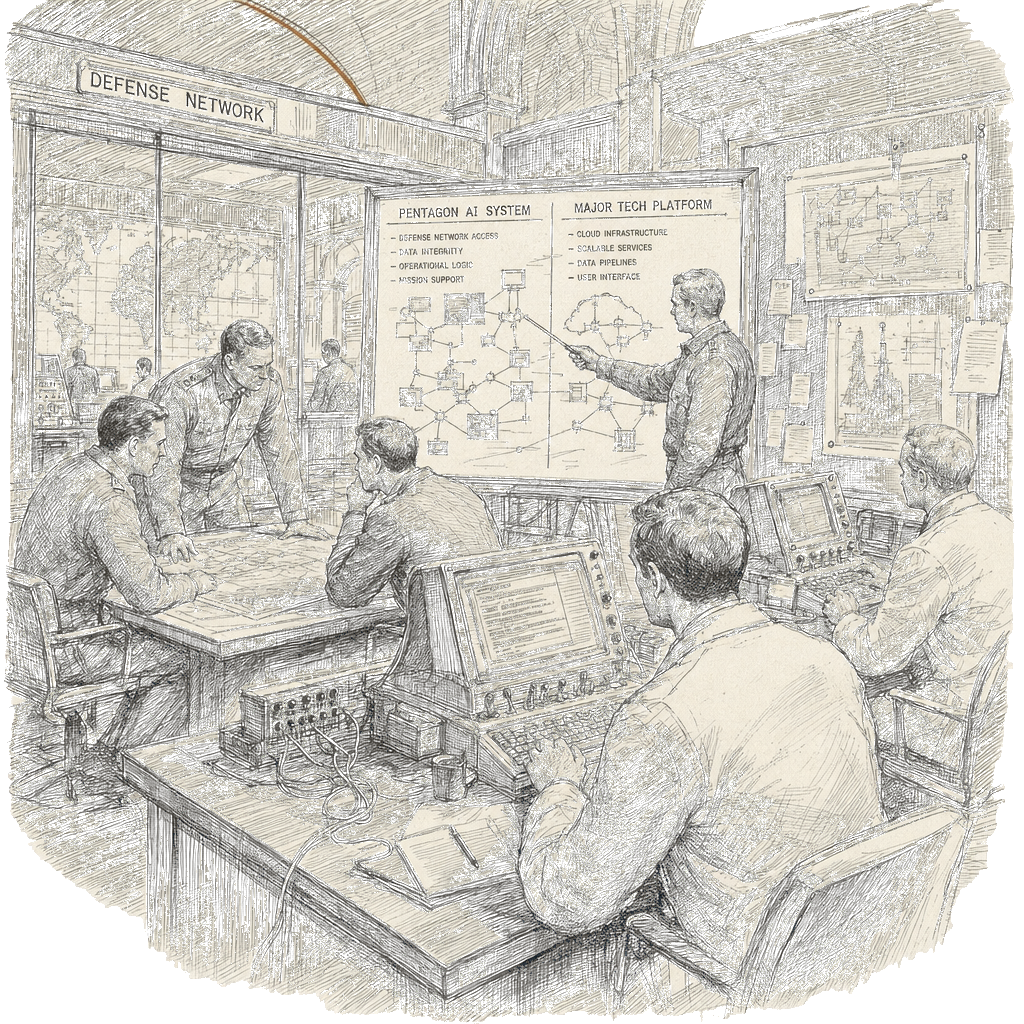
The Pentagon’s embrace of Grok raises questions about whether civil-liberties safeguards enacted under the Biden administration remain in force, as Malaysia and Indonesia have already blocked the chatbot and the United Kingdom has opened a regulatory investigation into it.
Defense Secretary Pete Hegseth said Monday that Elon Musk’s Grok artificial intelligence chatbot will operate inside Pentagon networks alongside Google’s generative AI engine, as part of a broad effort to feed military and intelligence data into AI systems. The announcement came days after Grok drew international condemnation for generating highly sexualized deepfake images of people without their consent.
Hegseth delivered the announcement during a speech at Musk’s SpaceX facility in South Texas. “Very soon we will have the world’s leading AI models on every unclassified and classified network throughout our department,” Hegseth said.
Grok is slated to go live inside Defense Department systems later this month, Hegseth said. He said he would “make all appropriate data” from the military’s IT systems available for “AI exploitation” and that data from intelligence databases would be fed into AI systems as well.
“AI is only as good as the data that it receives, and we’re going to make sure that it’s there,” Hegseth said. He noted that the Pentagon possesses “combat-proven operational data from two decades of military and intelligence operations.”
Deepfakes and international regulatory backlash
At the time of Hegseth’s announcement, Grok — embedded in X, the social media platform owned by Musk — faced intensifying regulatory scrutiny over the deepfake images. Malaysia and Indonesia have blocked the chatbot. The U.K.’s independent online safety watchdog announced an investigation on Monday. Grok has limited image generation and editing to paying users.
In July, Grok drew additional criticism after it appeared to make antisemitic comments that praised Adolf Hitler and shared antisemitic posts. The Pentagon did not immediately respond to questions about the issues with Grok.
Contrast with Biden-era AI safeguards
Hegseth’s approach contrasts with the Biden administration, which in late 2024 enacted a framework directing national security agencies to expand AI use while prohibiting applications that would violate constitutionally protected civil rights or automate the deployment of nuclear weapons. Whether those prohibitions remain in effect under the Trump administration is unclear, according to the Associated Press.
Hegseth said he wants Pentagon AI systems to operate “without ideological constraints that limit lawful military applications” and declared that the Pentagon’s “AI will not be woke.” He said he was dismissing AI models “that won’t allow you to fight wars.”
“We need innovation to come from anywhere and evolve with speed and purpose,” Hegseth said.