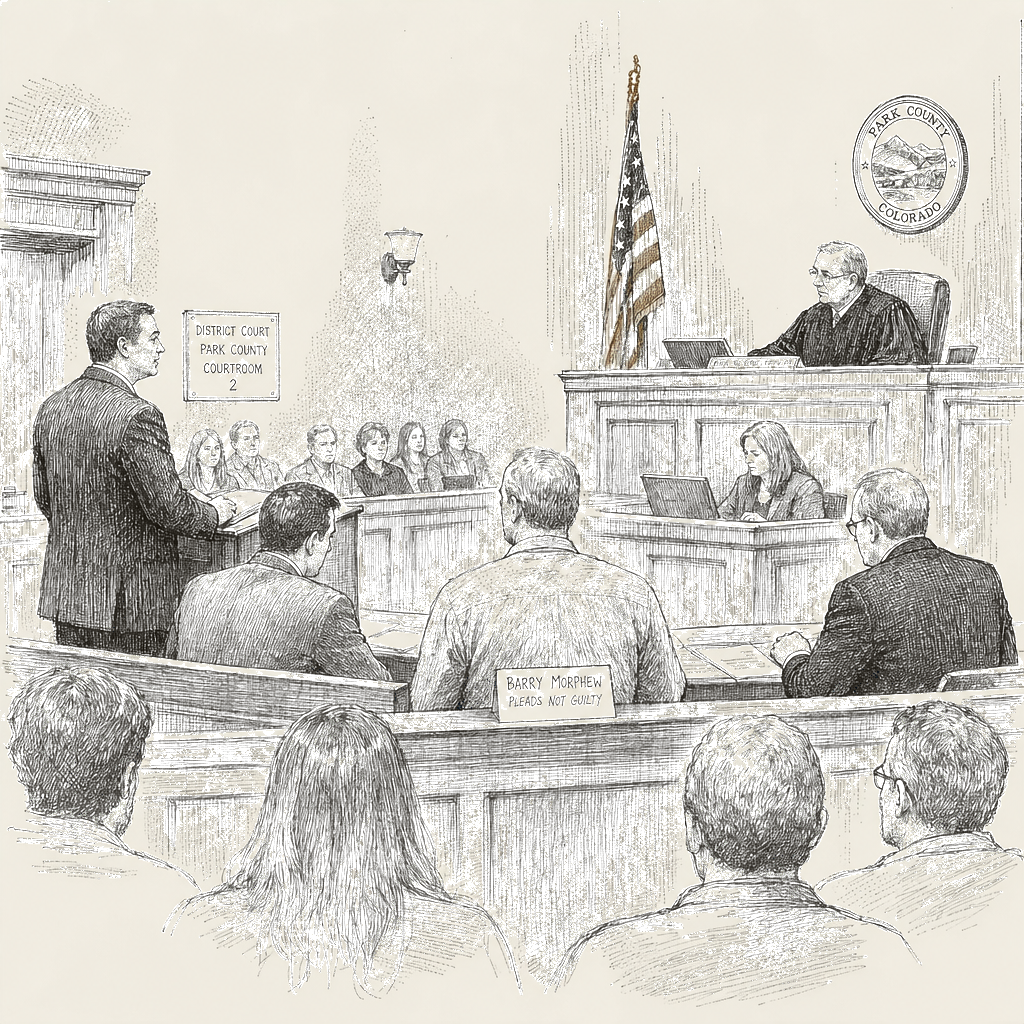
Barry Morphew entered a not guilty plea Monday to first-degree murder in the death of his wife, Suzanne Morphew, through his attorney, David Beller, at a brief hearing in Alamosa, Colorado. It was the second time Morphew has entered such a plea in the case, which began when Suzanne Morphew, 49, was reported missing on Mother’s Day 2020. Morphew has maintained his innocence.
The case, which drew national attention, has been resurrected after prosecutors secured a new indictment following the discovery of Suzanne Morphew’s skeletal remains in 2023 and forensic evidence linking a wildlife sedative to her death — a drug for which her husband held a local prescription.
Background
Morphew was first arrested in 2021, approximately a year after his wife’s disappearance, and charged with murder and tampering with evidence. The case collapsed in 2022, as it neared trial, after a judge barred prosecutors from calling key witnesses in response to their repeated failure to comply with evidence disclosure rules.
Suzanne Morphew’s skeletal remains were found off a dirt road in southern Colorado in 2023. Morphew was charged again with first-degree murder and arrested last year.
Evidence
Investigators found in Suzanne Morphew’s bone marrow a three-drug cocktail of butorphanol, azaperone, and medetomidine — known as BAM — used to tranquilize wildlife, according to the indictment. Barry Morphew was the only person in their area, other than wildlife officials, to hold a prescription for the drug cocktail, the indictment states.
The coroner’s office ruled her cause of death as “homicide by unspecified means” through intoxication from the three drugs. Her remains showed no signs of physical trauma.
A forensic anthropologist theorized that the body likely decomposed elsewhere before being moved to where it was found, according to the indictment.
The Disappearance
Suzanne Morphew’s mountain bike and helmet were found in separate locations near the family’s home in the area of Salida, Colorado, after her disappearance. Investigators suspected the bike had been deliberately thrown into a ravine, as there were no indications of a crash. A week after his wife went missing, Barry Morphew posted a video on Facebook pleading for her safe return.
Suzanne Morphew had been treated for follicular lymphoma, a type of blood cancer, before she disappeared. A medical port through which she could receive treatment was found with her remains, along with biking clothes similar to those she was known to wear.
New Prosecution
Morphew is now being prosecuted by a different district attorney than in the first case — the one serving the rural jurisdiction roughly 40 miles (65 kilometers) south of the Morphews’ home, where Suzanne Morphew’s remains were found.