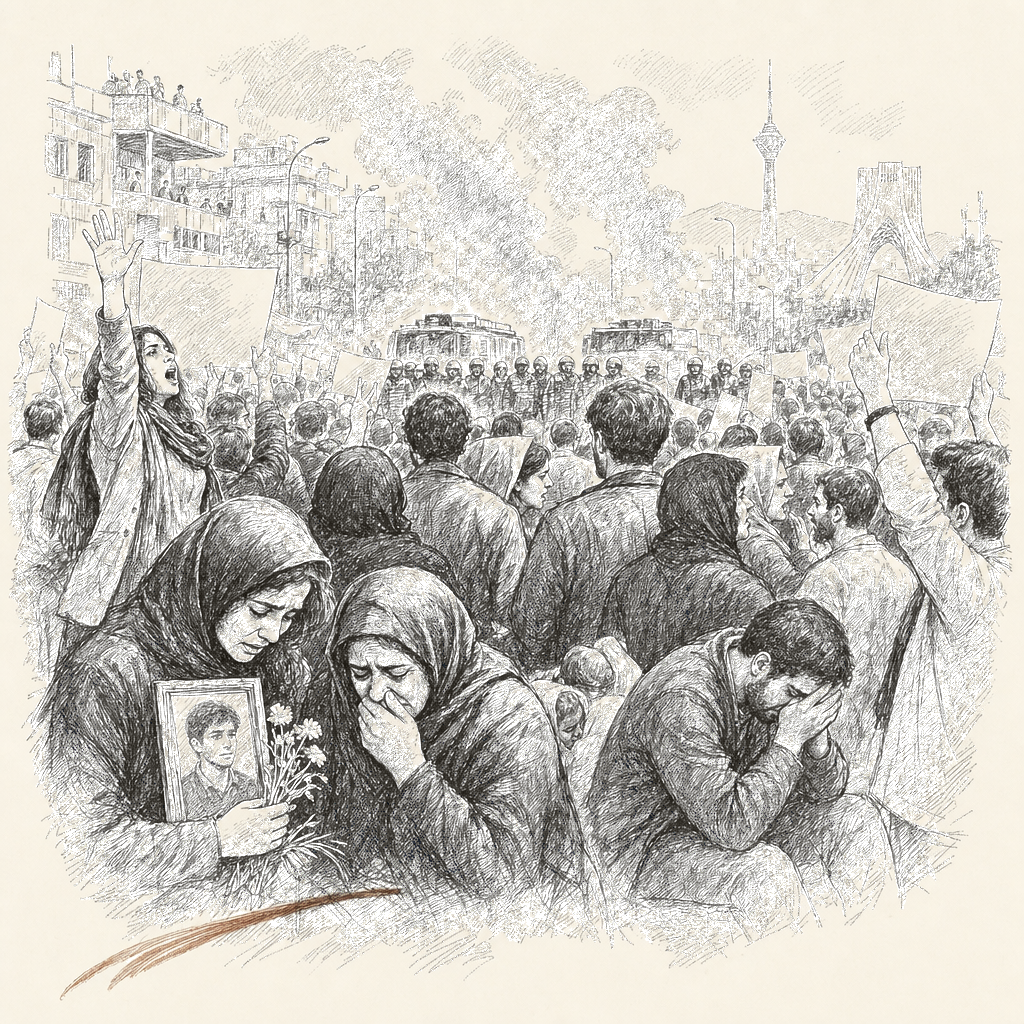
The demonstrations began Dec. 28 over the collapse of the Iranian rial and escalated into a direct challenge to Iran’s theocratic leadership. With internet and telephone service severed across Iran, independent monitoring from abroad has grown increasingly difficult even as the Trump administration signaled possible military review and major airlines canceled flights into the country.
Nationwide protests challenging Iran’s theocratic government reached their two-week mark Sunday, as the death toll rose to at least 116 people killed and more than 2,600 others detained, according to the U.S.-based Human Rights Activists News Agency.
The agency, which the Associated Press said has been accurate in multiple previous rounds of unrest in Iran, released its figures as Iran maintained an internet and telephone blackout that took effect Thursday, making independent verification from abroad increasingly difficult.
Iran’s attorney general, Mohammad Movahedi Azad, escalated threats Saturday, warning that anyone taking part in the protests would be considered an “enemy of God” — a charge that carries the death penalty under Iranian law — according to Iranian state television. The statement said even those who “helped rioters” would face the charge.
“Prosecutors must carefully and without delay, by issuing indictments, prepare the grounds for the trial and decisive confrontation with those who, by betraying the nation and creating insecurity, seek foreign domination over the country,” the statement read. “Proceedings must be conducted without leniency, compassion or indulgence.”
Supreme Leader Ayatollah Ali Khamenei has signaled a coming crackdown despite warnings from Washington.
U.S. Signals Support, Military Review Reported
President Donald Trump expressed support for the protesters in a social media post. “Iran is looking at FREEDOM, perhaps like never before. The USA stands ready to help!!!” Trump wrote.
The New York Times and Wall Street Journal, citing anonymous U.S. officials, reported Saturday that Trump had been presented with military options for a strike on Iran but had not made a final decision. The State Department separately warned: “Do not play games with President Trump. When he says he’ll do something, he means it.”
Economic Collapse Sparked the Demonstrations
The protests began Dec. 28 over the collapse of the Iranian rial, which traded at over 1.4 million to $1 as international sanctions — levied in part over Iran’s nuclear program — have squeezed the country’s economy. The demonstrations escalated into direct challenges to Iran’s theocratic leadership.
Iranian state television, while portraying government control and reporting on casualties among security forces, acknowledged that protests continued into Sunday morning in Tehran and in the holy city of Mashhad to the northeast. The semiofficial Fars news agency, believed to be close to Iran’s paramilitary Revolutionary Guard, released surveillance footage it said came from Isfahan, showing what appeared to be a protester firing a long gun and others throwing gasoline bombs at what appeared to be a government compound.
In one video verified by the Associated Press, thousands of protesters demonstrated Friday in the Saadat Abad area of northern Tehran. “Death to Khamenei!” a man chanted.
Exiled Crown Prince Urges Continued Protests
Iran’s exiled Crown Prince Reza Pahlavi asked demonstrators to take to the streets Saturday and Sunday, urging them to carry Iran’s old lion-and-sun flag and other national symbols used during the time of the shah to “claim public spaces as your own.” The demonstrations began weeks before Pahlavi issued his call; whether crowds chanting support for the shah reflect support for Pahlavi himself or a broader desire to return to conditions before the 1979 Islamic Revolution is unclear, the AP reported.
Fears of Bloody Crackdown
Ali Rahmani, son of imprisoned Nobel Peace Prize laureate Narges Mohammadi, said the communications blackout raised fears of a repeat of the government’s response to a 2019 protest, when security forces killed hundreds of demonstrators.
“They are fighting, and losing their lives, against a dictatorial regime,” Rahmani said.
Austrian Airlines said Saturday it had suspended its flights to Iran “as a precautionary measure” through Monday. Turkish Airlines earlier announced the cancellation of 17 flights to three cities in Iran.