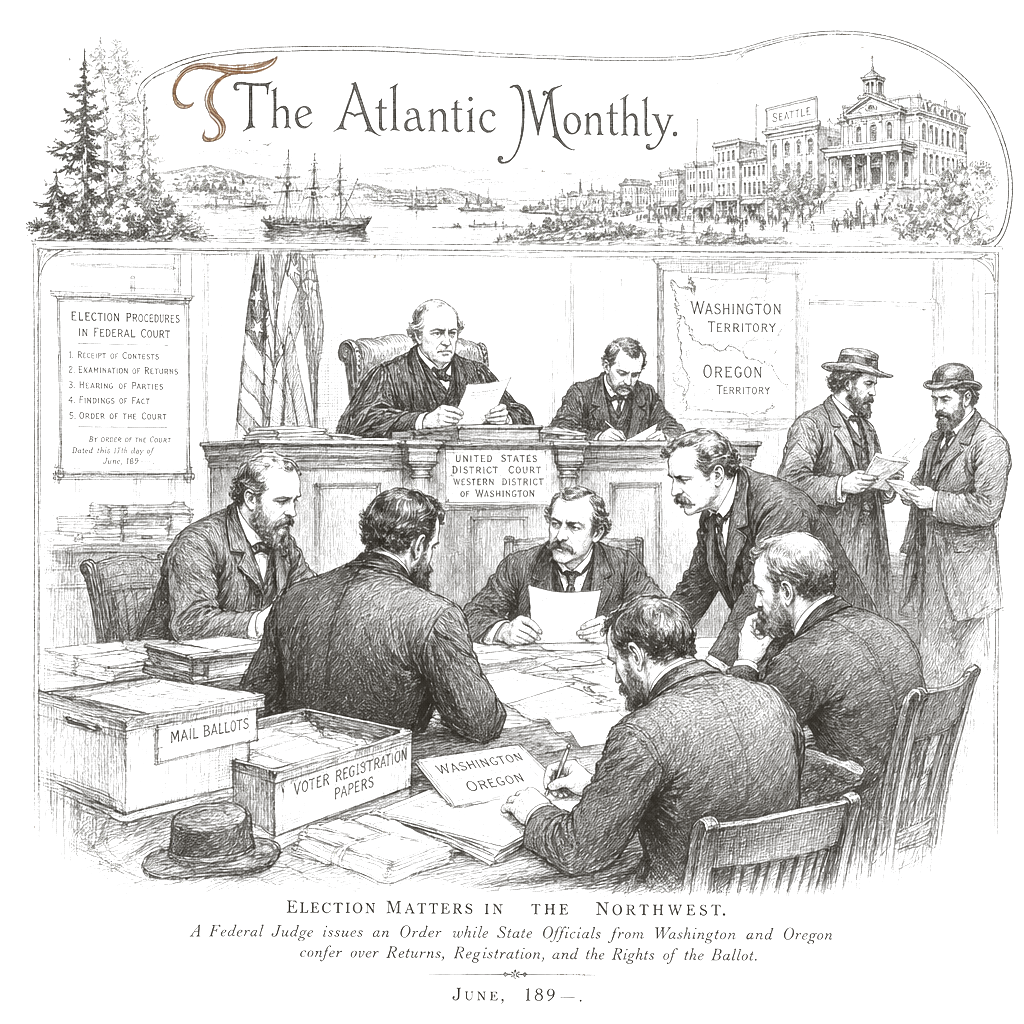
The ruling is the third federal court to strike down the elections order, with judges across separate jurisdictions concluding that the Constitution’s grant of election-regulation authority to Congress and the states forecloses the executive action.
A federal judge in Seattle on Friday blocked President Donald Trump’s administration from enforcing most of his executive order on elections against Washington and Oregon, the latest ruling to find that the order’s core requirements exceed the president’s constitutional authority.
U.S. District Judge John H. Chun found that provisions requiring documentary proof of citizenship to register to vote and mandating that all mail ballots be received — not merely postmarked — by Election Day violated the separation of powers. The Constitution grants Congress and the states, not the executive branch, the authority to regulate federal elections, he said.
“Today’s ruling is a huge victory for voters in Washington and Oregon, and for the rule of law,” Washington Attorney General Nick Brown said. “The court enforced the long-standing constitutional rule that only States and Congress can regulate elections, not the Election Denier-in-Chief.”
Third court to block the order
The ruling is the third federal court to strike down the elections order. A court in Massachusetts issued a similar ruling in a case brought by 19 states, and a court in Washington, D.C., reached the same conclusion in a case filed by Democratic and civil rights groups.
Oregon and Washington sued separately from those other plaintiffs because, as exclusively vote-by-mail states, they said they faced particular harms from the order. The executive order, which Trump issued in March, also threatened states’ federal funding if election officials did not comply.
Postmark rules at issue
Both states accept ballots postmarked by Election Day regardless of when they arrive. During the 2024 general election, Washington counted nearly 120,000 ballots received after Election Day but postmarked on time. Oregon received nearly 14,000 such ballots under the same postmark rule. Officials in both states said the order could disenfranchise thousands of voters.
Noncitizen voting is rare
The executive order reflected Trump and other Republicans’ claim that large numbers of noncitizens might be casting ballots. Voting by noncitizens is rare, according to the Associated Press, and those caught can face felony charges and deportation.