The new three-year economic outlook, which accounts for Trump’s tariffs, immigration policies, and the late-2025 federal government shutdown, projects moderate GDP growth, a temporary rise in unemployment, and inflation remaining above the Federal Reserve’s 2% target through most of the forecast period.
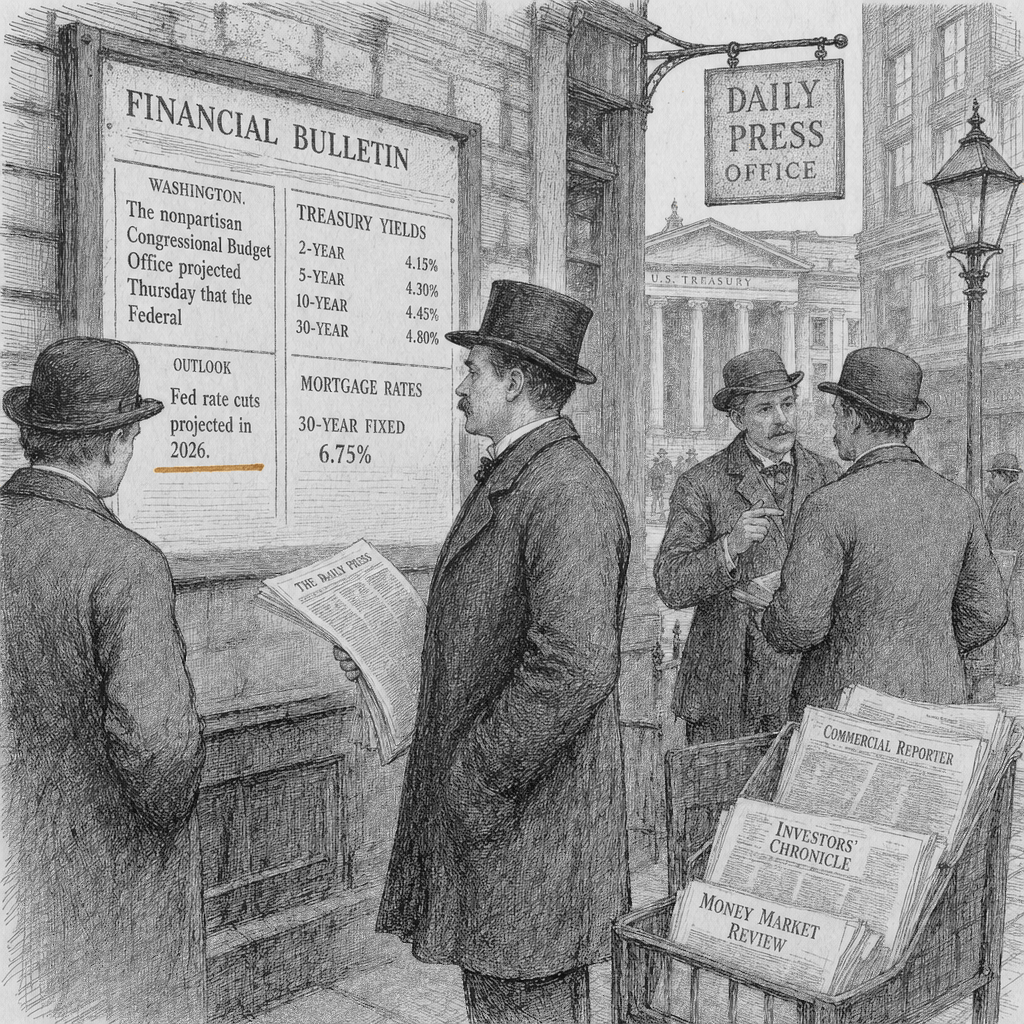
The nonpartisan Congressional Budget Office projected Thursday that the Federal Reserve will cut its benchmark interest rate in 2026, with the key rate settling at 3.4% by the end of President Donald Trump’s term in 2028. The forecast carries a significant caveat for home buyers: even as short-term rates fall, the 10-year Treasury yield — the benchmark that sets mortgage rates — stood at 4.15% on January 8 and is projected by the budget office to climb to 4.3% by the fourth quarter of 2028.
The new three-year outlook, which factors in Trump’s tariffs, immigration policies, and the late-2025 federal government shutdown, projects moderate growth, a temporary rise in unemployment, and inflation that remains above the Federal Reserve’s 2% target through most of the forecast period.
Interest rates and mortgage costs
The CBO’s rate-cut projection reflects an expectation that the Fed will continue easing monetary policy in 2026 before the key rate settles at 3.4% — a level that would represent a substantial decline from recent peaks. The budget office cautioned, however, that this easing will not translate to cheaper mortgage borrowing.
The 10-year Treasury yield, which was 4.15% as of January 8, is projected by the CBO to rise gradually to 4.3% by the fourth quarter of 2028. Rising long-term Treasury yields typically push mortgage rates and other long-term borrowing costs higher, meaning home buyers could face increased costs over that period even as the Fed continues cutting at the short end.
Growth outlook
Real gross domestic product growth is projected at 2.2% in 2026, supported by Trump’s tax and spending law — passed by Congress and signed in July — and a rebound from the late-2025 shutdown. Growth is then projected to slow to an average of 1.8% in 2027 and 2028, as fiscal support wanes and labor force growth slows.
The Federal Reserve’s own projections are slightly higher for those later years, with the Fed expecting growth of 2% in 2027 and 1.9% in 2028, according to the CBO report.
The budget office said Trump’s tariffs, immigration policies, and the shutdown “affected the near-term path of GDP, employment, and inflation but did not materially change the overall economic outlook through 2028.”
Jobs and inflation
The U.S. unemployment rate stood at 4.6% in early January 2026, and the CBO projects that level to mark the cyclical peak for the forecast period. The budget office expects the rate to ease to 4.4% by 2028, a trajectory it attributed largely to effects of Trump’s tax and spending law and a reduction in the migrant labor force.
Inflation is expected to remain above the Fed’s 2% target in the near term, driven by tariffs and stronger demand, before gradually falling to 2.1% by 2028.
Policy context and background
On Wednesday, the CBO released a separate set of projections estimating that the U.S. population will grow by 15 million people over the next 30 years — a smaller increase than previous estimates, attributed to Trump’s immigration policies and a lower projected fertility rate.
Congress established the Congressional Budget Office more than 50 years ago to provide objective, impartial analysis to support the federal budget process. The Thursday report represents the budget office’s first three-year economic outlook to account for Trump’s second-term policy agenda.