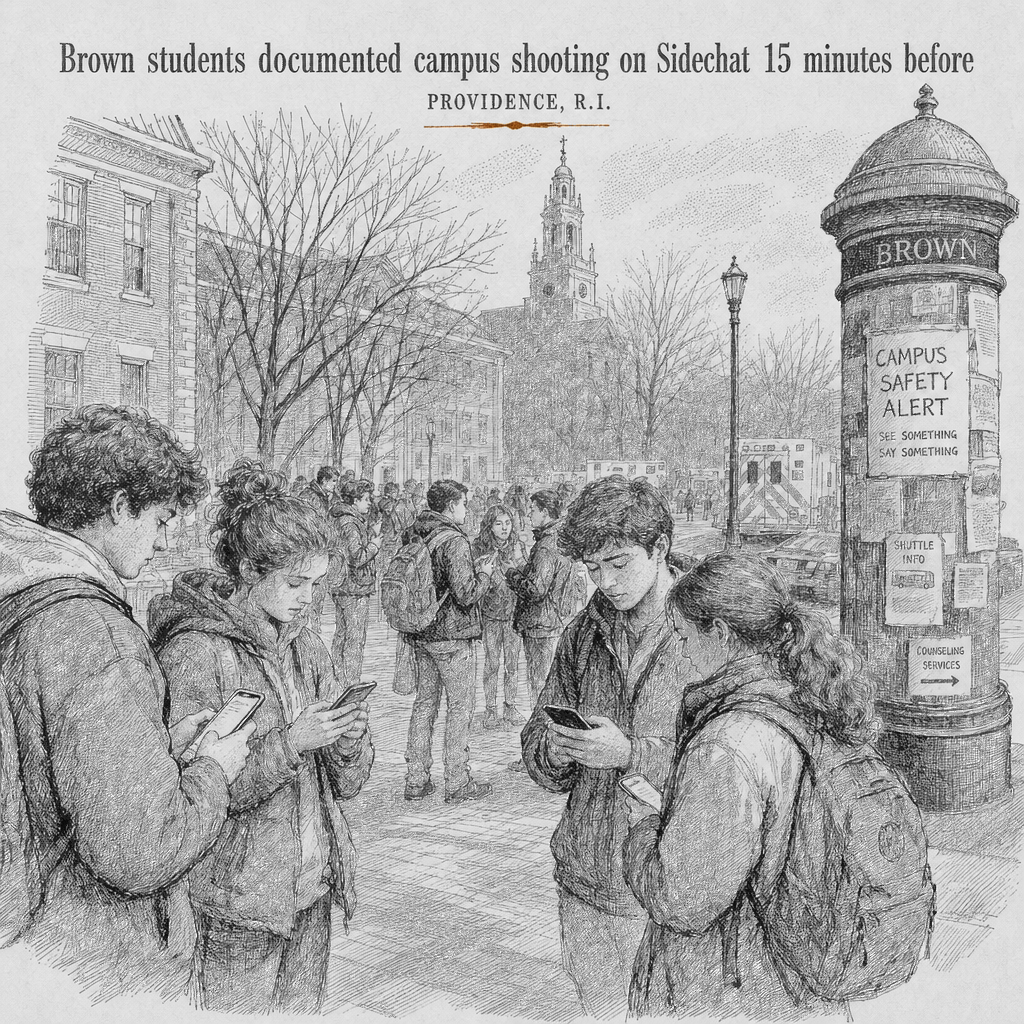
PROVIDENCE, R.I. — Fifteen minutes before Brown University sent its first active-shooter alert on Dec. 13, students were already documenting the attack on Sidechat, an anonymous campus message board, according to an Associated Press analysis of nearly 8,000 posts from the 36 hours following the shooting. The attack, which killed two students at the Ivy League institution, unfolded during finals week inside Barus and Holley, an academic building on the Providence campus.
The Sidechat posts — raw, fragmented and sometimes panicked — show how students now turn to social media platforms for emergency information faster than official alert systems can deliver it, raising questions about the role of anonymous apps in campus crises and the limits of real-time crowd-sourced information.
The gap in official communications
At 4:06 p.m., a student posted to Sidechat: “Why are people running away from B&H?” Four minutes later, another user wrote: “STAY AWAY FROM THAYER STREET NEAR MACMILLAN 2 PEOPLE JUST GOT SHOT IM BEING DEAD SERIOUS.”
Brown University’s first alert reached its community at 4:21 p.m. By that time, the shooter had already left campus — a fact university officials did not yet know.
Brian E. Clark, a university spokesperson, said the alert reached 20,000 people minutes after public safety officials were notified that shots had been fired. Officials deliberately did not use sirens, Clark said, to avoid sending people who were seeking shelter into harm’s way. Brown commissioned two external reviews of its emergency response with the aim of enhancing public safety and security, Clark said.
How students navigated the chaos
Sidechat allows anyone with a verified university email to post to a campus-specific feed. On most days, the Brown feed carries student complaints about dining hall food, jokes about professors and stress about exams. On Dec. 13 it became a primary channel for emergency information and mutual aid.
Students sheltered in dorm rooms with barricaded doors and closed blinds, posting from library tables and classroom floors. Some posts came from wounded students. Others asked urgent questions — whether there was a lockdown, where the shooter was, whether it was safe to move. “So r we on lockdown or what,” one student wrote.
As the lockdown extended into the night, the platform documented competing demands for speed and accuracy. Some students pushed back against unverified claims. “If you’re talking about the active situation please add a source!!!” one user wrote. Others created a 28-page Google Doc gathering confirmed information, and some posted police scanner transcriptions while warning against relying on artificial intelligence summaries of the unfolding situation.
The platform also spread false information. Within about 30 minutes of the shooting, posts incorrectly claimed the shooter had been caught. Reports of additional gunshots — later proven false — continued into the night and the following day, fueling fear among students still sheltering in place.
“Frankly I’d rather hear misinformation than people not report stuff they’ve heard,” one student wrote on Sidechat, according to the AP.
Aftermath
It would be days before authorities identified the suspect. He was found dead in New Hampshire of a self-inflicted gunshot wound and was later linked to the killing of a Massachusetts Institute of Technology professor.
The first snowfall of the academic year fell while students sheltered. When the lockdown lifted the following morning, students walked through fresh snow toward blood donation centers. Flowers appeared at the campus gates and outside Barus and Holley.
“Will never see the first snow of the season and not think about those two,” one student wrote on Sidechat, according to the AP.