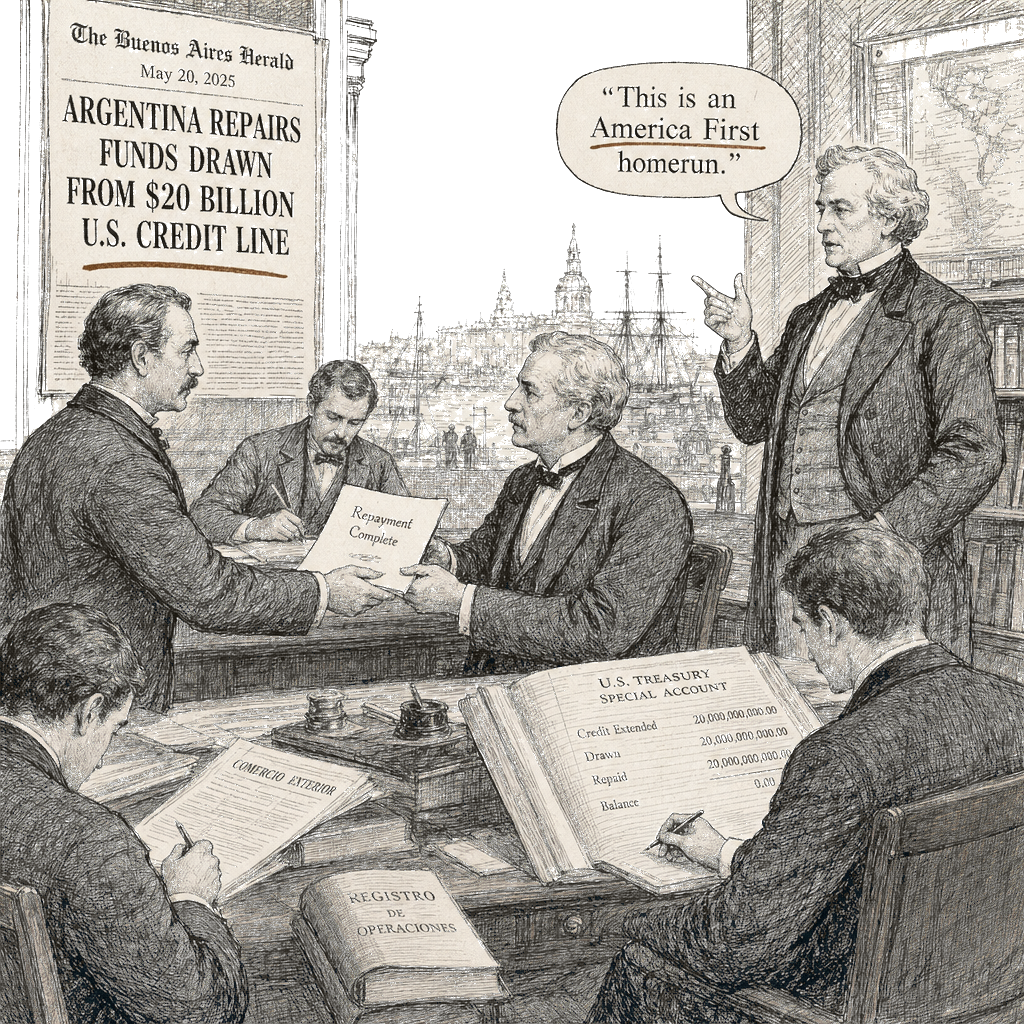
U.S. Treasury Secretary Scott Bessent said Friday that Argentina has repaid the funds it drew from a $20 billion credit line with the Trump administration, a move he said is important for Argentine President Javier Milei to restore confidence in the South American country’s economy.
In remarks accompanying the announcement, Bessent said Argentina had “quickly and fully repaid its limited draw,” without specifying the amount of the repayment.
The Treasury’s latest report on the status of the credit line said Argentina’s central bank traded pesos for $2.5 billion through the swap as of the end of October, and the Argentine Central Bank confirmed Bessent’s announcement.
The credit line was part of a contentious and largely unprecedented U.S. rescue last October that provided dollar liquidity to the Trump administration’s cash-strapped ideological ally and helped halt a market rout in Argentina ahead of crucial midterm elections.
After Milei’s libertarian party won a major victory in the vote, the reporting said it cemented support for Milei’s austerity program and helped quash investor concerns about whether Argentina could repay its debts. Another sign of revived optimism, according to the report, was that Milei’s government issued a dollar bond for the first time in eight years last month, which was seen as a step toward a return to international bond markets.
Bessent said that, because of Argentina’s deposit, the U.S. Exchange Stabilization Fund that had been tapped for the bailout now holds no more Argentine pesos.
In a message cited in the report, Bessent praised the payment as aligned with “America First,” writing that “Stabilizing a strong American ally – and making tens of millions in profit for Americans – is an America First homerun deal.” He also wrote that “Setting the course for Latin America, a strong and stable Argentina that helps anchor a prosperous Western Hemisphere is in our clear best interest.”
Argentina’s economy minister, Luis Caputo, thanked the Trump administration “for the trust in our economic policy,” and said in remarks quoted in the report that it was “an excellent reality for our country to have been able to build this geopolitical alliance and to know that we have the explicit support of the most important country in the world.”
The report said the broader U.S. political context included doubts about the consistency of Trump’s “America First” foreign policy and backlash in the U.S. over putting taxpayer funds at risk. It also said experts have criticized the loan as opaque and apparently unconditional.
Despite the repayment announcement, the report said Argentina is not out of the woods, with foreign exchange reserves still running perilously low. It added that the country is expected to face further strain in the coming months from repayments on previous International Monetary Fund loans and other private debt.