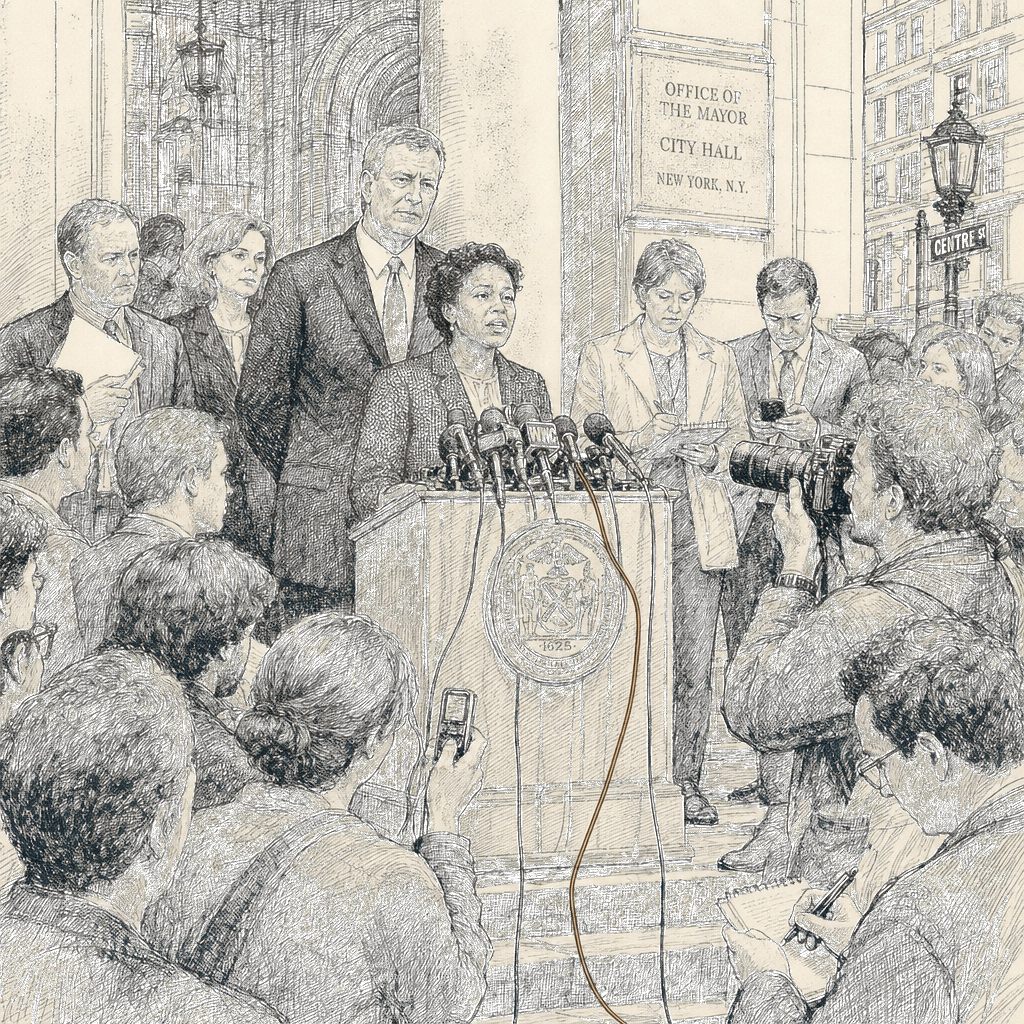
New York City Mayor Zohran Mamdani said Wednesday he stands behind his newly appointed director of tenant protections, Cea Weaver, after critics circulated years-old social media posts in which she called homeownership “a weapon of white supremacy” and advocated treating private property as a “collective good.” The backlash drew condemnations from officials in the U.S. Department of Justice, the editorial board of The Washington Post, and former Mayor Eric Adams, according to the Associated Press.
The controversy marks the second time in as many weeks that a Mamdani appointee has faced scrutiny over past social media posts — and it arrives as the new mayor is pressing a sweeping tenant-protection agenda that includes a contested proposal to force negligent landlords to sell their properties to the city.
Appointment and backlash
Mamdani, a Democrat, appointed Weaver in the days following his inauguration as executive director of the Mayor’s Office to Protect Tenants. He said the city would empower the office to take “unprecedented” steps against negligent landlords.
The since-deleted posts were circulated on social media by critics of the administration. They included a 2017 tweet in which Weaver described homeownership as “a weapon of white supremacy masquerading as ‘wealth building public policy,’” as well as messages calling for private property to be treated as a “collective good” and to “impoverish the *white* middle class,” the AP reported.
Asked about the posts on Wednesday, Mamdani did not address their substance. He defended Weaver based on her record of “standing up for tenants across the city and state.”
Weaver said in an interview with a local television station that some of the messages were “regretful” and “not something I would say today.”
“I want to make sure that everybody has a safe and affordable place to live, whether they rent or own, and that is something I’m laser-focused on in this new role,” she said.
Criticism from across the spectrum
Eric Adams, the city’s former mayor and a fellow Democrat, said the remarks showed “extreme privilege and total detachment from reality.”
The condemnations from DOJ officials and The Washington Post editorial board signal the high-profile scrutiny that Mamdani’s administration faces from the outset.
Contrast with earlier resignation
A mayoral spokesperson, Dora Pekec, said Weaver’s past posts were known to the administration before her appointment — a distinction from the earlier case involving Catherine Almonte Da Costa, another appointee who resigned last month after the Anti-Defamation League shared social media posts she had made over a decade ago that featured antisemitic tropes. Mamdani had said he was unaware of Da Costa’s messages at the time of that appointment.
Weaver’s background and the stakes of the role
Weaver previously led the Housing Justice for All coalition, which was widely credited with helping persuade state lawmakers to pass a sweeping package of tenant protections in 2019. In her new role, she would be central to carrying out one of Mamdani’s most polarizing campaign pledges: identifying negligent landlords and compelling them to negotiate the sale of their properties to the city if they are unable to pay fines for code violations.
The “public stewardship” proposal has drawn opposition from landlord groups and skepticism from other city officials. But in a press conference immediately following his inauguration, Mamdani said the city would take “precedent-setting” action against the owner of a Brooklyn apartment building that owed the city money and was in bankruptcy proceedings — and then announced Weaver’s appointment to cheers from members of a tenants union gathered in the building’s lobby.
Weaver acknowledged the scope of the challenge ahead.
“It is going to be challenging,” she said. “New York is home to some of the most valuable real estate in the world. Everything about New York politics is about that fact.”