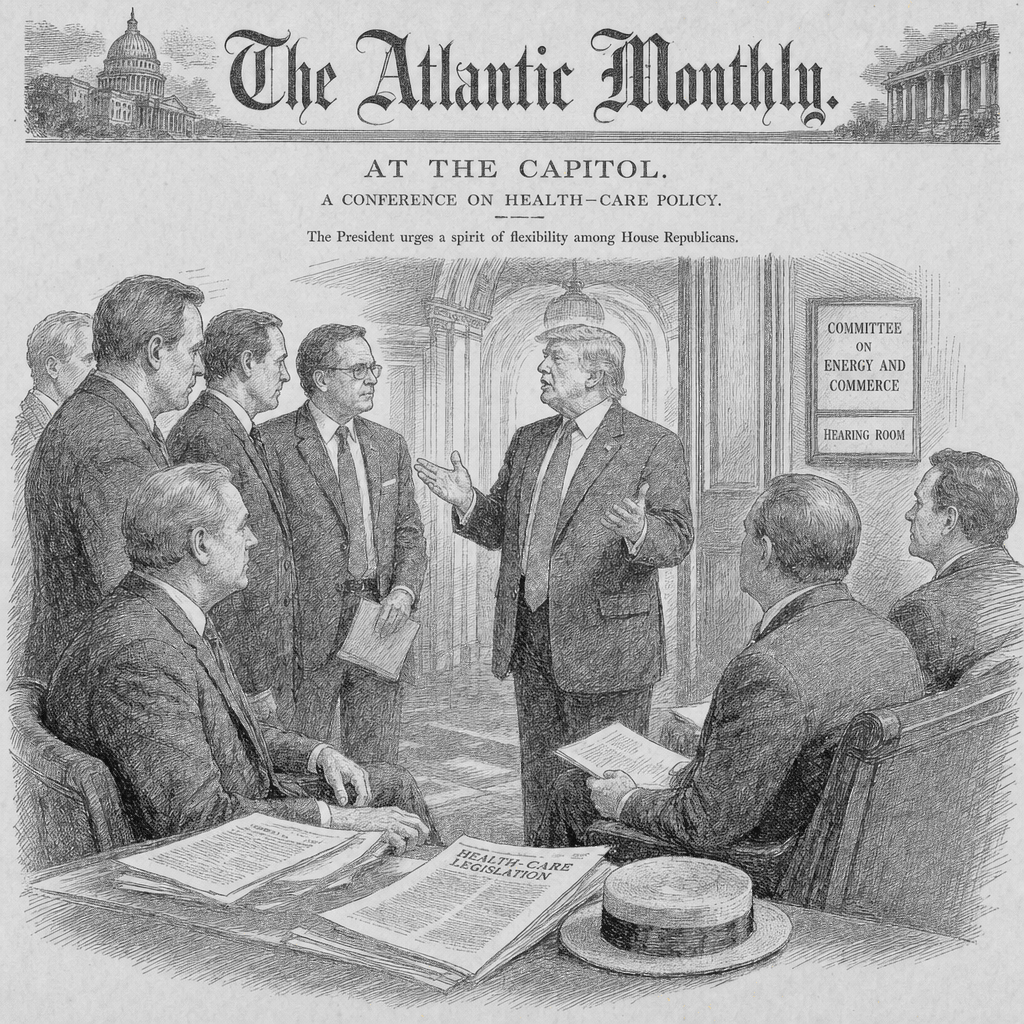
Trump’s suggestion drew immediate condemnation from anti-abortion conservatives and resistance from Senate Republicans, revealing intraparty fault lines as the GOP attempts to pass health care legislation while defending a narrow House majority ahead of November midterm elections.
President Donald Trump on Tuesday urged House Republicans to show flexibility on the Hyde Amendment — the 50-year budget restriction barring federal money from paying for abortion services — telling lawmakers they needed to bend on the policy to reach a deal on health care subsidies. The remarks came at a House Republican caucus retreat in Washington as Trump pushed his party to resolve a health care crunch heading into the midterm election year.
“You have to be a little flexible” on the Hyde Amendment, Trump told the assembled Republicans. “You gotta be a little flexible. You gotta work something. You gotta use ingenuity.”
The suggestion drew immediate condemnation from anti-abortion conservatives and met resistance from Senate Republicans, exposing intraparty fault lines as the GOP attempts to pass health care legislation while defending a narrow House majority.
The health care context
Trump’s remarks came against the backdrop of a health care crunch his party is under pressure to resolve. Enhanced Affordable Care Act premium subsidies expired Dec. 31, 2025, leaving millions of policyholders facing steep premium increases. Some Democrats have made easing the Hyde restrictions a condition for any new subsidy agreement.
Trump endorsed a GOP proposal to replace the ACA subsidies — which taxpayers typically direct to insurance companies after selecting their policies — with direct payments consumers could use for a range of health care expenses. “Let the money go directly to the people,” he said.
Addressing GOP leaders including Speaker Mike Johnson directly, Trump added: “If you can do that, you’re going to have — this is going to be your issue.”
Senate resistance
Senate Majority Leader John Thune indicated his chamber was not prepared to ease the restriction. Any legislation must ensure “that those dollars aren’t being used to go against the practice that has been in place for the last 50 years,” Thune said Tuesday afternoon.
Conservative backlash
Anti-abortion advocacy groups pushed back sharply. Marjorie Dannenfelser, president of Susan B. Anthony Pro-Life America, warned that accommodating Democrats on Hyde would make Republicans “sure to lose this November.”
“To suggest Republicans should be ‘flexible’ is an abandonment of this decades-long commitment,” Dannenfelser said in a statement. “The voters sent a GOP trifecta to Washington and they expect it to govern like one. Giving in to Democrat demands that our tax dollars are used to fund plans that cover abortion on demand until birth would be a massive betrayal.”
Gavin Oxley of Americans United for Life wrote in an op-ed published this week in The Hill that Republicans must hold firm, headlining his piece “Republicans must hold the line: No Hyde Amendment, no deal on health care.” Oxley argued that if Republicans play their cards right, they “just might earn back enough of their base’s trust to sustain them through the 2026 midterms.”
Background on the Hyde Amendment
The Hyde Amendment, named for the late Rep. Henry Hyde, has been attached to federal spending bills since 1976 — a year after the Supreme Court’s Roe v. Wade decision legalized abortion nationwide. It bars the Medicaid program, the joint federal-state insurer for low-income and disabled Americans, from covering abortions except in cases of rape, incest, or a threat to the woman’s life.
Congress has reauthorized the policy repeatedly through spending legislation. Democrats grew increasingly opposed to the restriction over decades; the shift became most prominent when Joe Biden reversed his longtime support for the ban during the 2020 Democratic presidential primary.
Trump supported abortion rights before entering politics in 2015. He has generally aligned with the anti-abortion wing of the Republican coalition — particularly on Supreme Court appointments that produced the 2022 decision overturning Roe — while displaying a recurring willingness to treat the issue as a negotiating variable. His remarks Tuesday reflect both tendencies.