Outlets that held the story
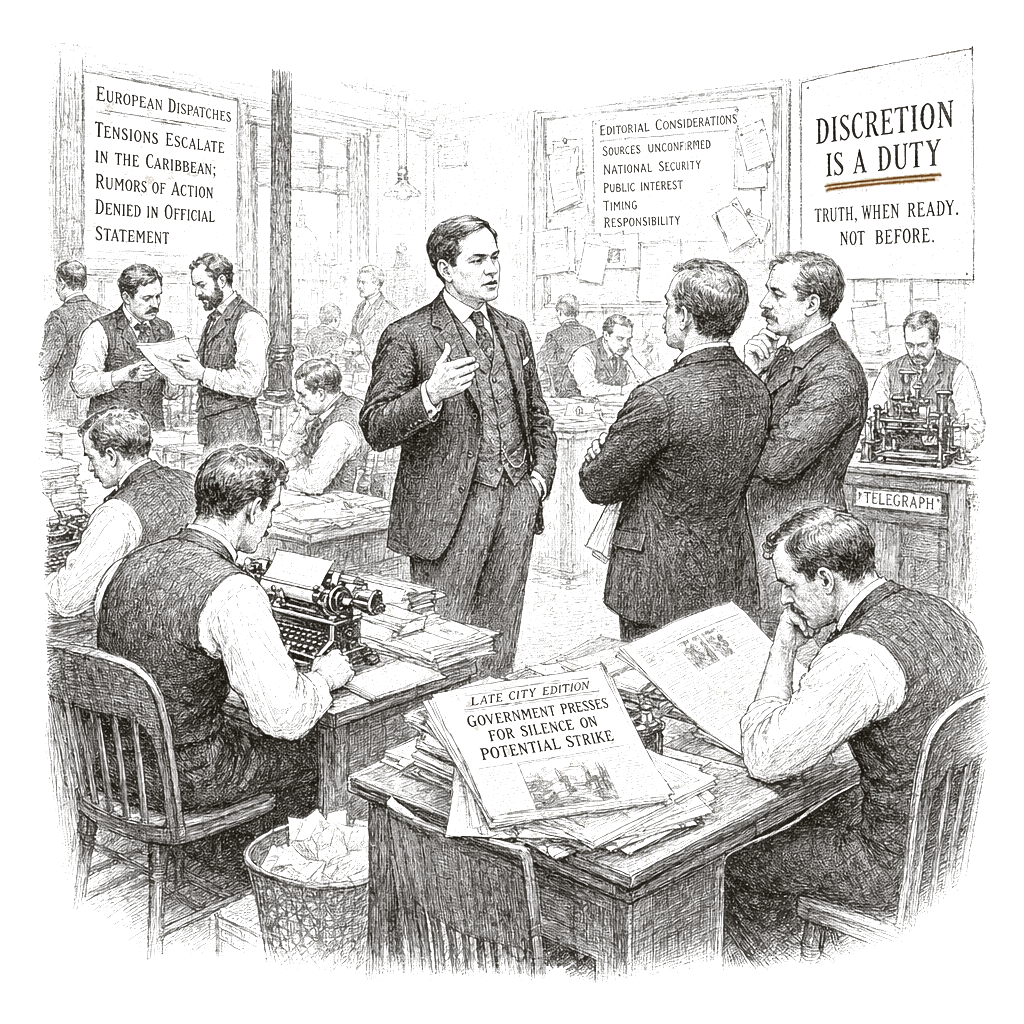
Semafor, citing people familiar with communications between the administration and news organizations, reported that The New York Times and The Washington Post had each learned of the Venezuela operation in advance but withheld publication to avoid endangering U.S. military personnel. Representatives for both outlets declined to comment to the Associated Press on Monday.
The Associated Press said it did not have advance word that the operation would take place. AP journalists in Venezuela heard and observed explosions and reported them on the wire more than two hours before President Donald Trump announced the strike on his Truth Social platform in the predawn hours of Saturday. U.S. involvement was not confirmed until Trump’s post.
Earlier, when Atlantic editor Jeffrey Goldberg was inadvertently included in a Signal text chain in which Hegseth disclosed information about a U.S. attack in Yemen, Goldberg did not report on the events until after U.S. personnel were out of danger and the information had been thoroughly checked.
Journalists and editors draw a distinction
Dana Priest, a longtime national security reporter at the Post who now teaches at the University of Maryland, said withholding information on a planned military mission is routine for news organizations. Even after operations conclude, she said, the Post has asked government authorities whether revealing specific details could endanger people.
Priest drew a firm line, however, between reporting that could put lives at risk and reporting that could prove embarrassing to an administration. The former can be voluntarily held; the latter is not grounds for suppression.
“The reporters are not going to be deterred by a ridiculously broad censorship edict by the Trump administration,” Priest said. “They’re going to dig in and work even harder. Their mission is not to curry favor with the Trump administration. It’s to report information to the public.”
Barbara Starr, a former CNN defense correspondent, said the Venezuela episode demonstrated the institutional capacity of the press corps Hegseth has sought to restrict.
“What the so-called legacy Pentagon press corps has demonstrated is it can act responsibly, as it always has, to protect troops’ lives,” Starr said. “But even more important perhaps is it demonstrates the media makes every effort to continue to cover the news outside of Pete Hegseth’s control and endless message points.”
The Times filed a lawsuit last month seeking to overturn the Pentagon’s press rules.
A historical parallel with a cautionary ending
The episode echoes a well-known case from six decades ago. President John F. Kennedy persuaded editors at the Times not to report when the newspaper learned in advance of a U.S.-backed invasion by Cuban exiles at the Bay of Pigs. The mission ended in catastrophic failure. A Times editor, Bill Keller, later said Kennedy expressed regret that the newspaper had not published what it knew, because the report might have prevented the disaster.
The parallel has long underscored what press-freedom advocates argue: in a country with freedom of the press, the ultimate decision on whether to publish rests with the news organization, not with the government — whether the request is to hold the story or to kill it.