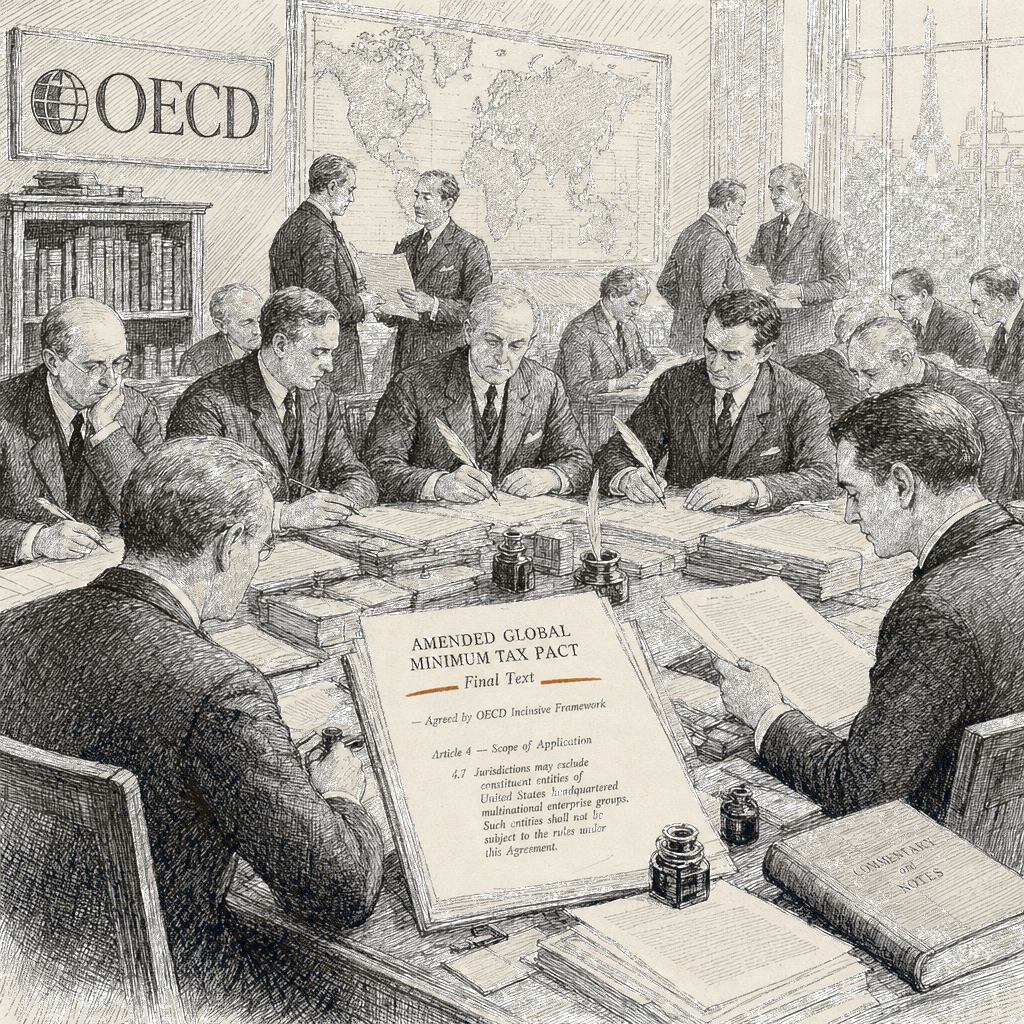
OECD announces revised plan; excludes large U.S.-based multinationals from the 15% minimum
The Organization for Economic Co-operation and Development said Monday that nearly 150 countries agreed on a revised plan to stop large global companies from shifting profits to low-tax jurisdictions.
The OECD said the amended version excludes large U.S.-based multinational corporations from the 15% global minimum tax, following negotiations involving President Donald Trump’s administration and other members of the Group of Seven wealthy nations.
OECD Secretary-General Mathias Cormann called the agreement a “landmark decision in international tax co-operation” and said it “enhances tax certainty, reduces complexity, and protects tax bases.”
U.S. officials frame exemption as sovereignty protection
U.S. Treasury Secretary Scott Bessent called the agreement “a historic victory in preserving U.S. sovereignty and protecting American workers and businesses from extraterritorial overreach.”
The revised framework, the OECD said, builds on a plan initially crafted in 2021, when the deal set a global minimum corporate tax of 15%.
Under the 2021 framework, the stated goal was to stop multinational corporations from using “accounting and legal maneuvers” to shift earnings to low- or no-tax havens—jurisdictions often described in the reporting as places where companies do little or no business, including Bermuda and the Cayman Islands.
Past 2021 deal driver criticized and later revised after U.S. talks
Former Treasury Secretary Janet Yellen was cited in the announcement as a key driver of the 2021 OECD global tax deal, with the 15% minimum corporate tax described as one of her top priorities.
The 2021 plan was widely panned by congressional Republicans, who argued it would make the U.S. less competitive in a global economy.
The Trump administration later re-negotiated the deal in June, after congressional Republicans rolled back a “revenge tax” provision from Trump’s big tax and spending bill. The reporting said the provision would have let the federal government impose taxes on companies with foreign owners, and also on investors from countries judged to charge “unfair foreign taxes” on U.S. companies.
Tax groups criticize; some lawmakers praise
Tax transparency groups criticized the amended OECD plan. Zorka Milin, policy director at the FACT Coalition, said the deal risks nearly a decade of global progress on corporate taxation only to allow the largest, most profitable American companies to keep parking profits in tax havens.
Watchdogs argued that the minimum tax is intended to halt an international “race to the bottom” that has allowed multinational businesses to book profits in countries with low tax rates.
Congressional Republicans applauded the finalized deal. Senate Finance Committee Chair Mike Crapo, R-Idaho, and House Ways and Means Committee Chair Jason Smith, R., said in a joint statement that the agreement marks “another significant milestone in putting America First and unwinding the Biden Administration’s unilateral global tax surrender.”