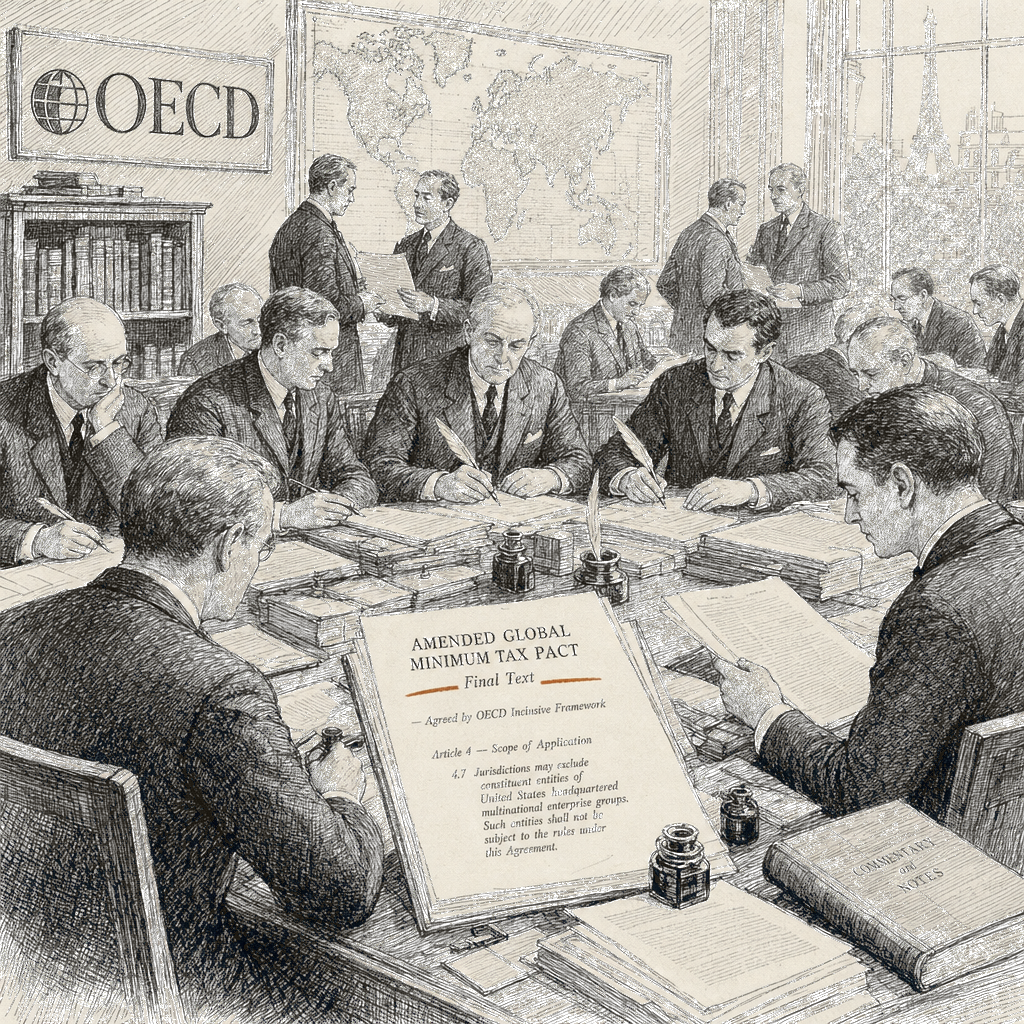
The amended pact represents a significant rollback of the 2021 OECD agreement championed by former Treasury Secretary Janet Yellen, which sought to halt the decades-long race to the bottom in corporate taxation by stopping multinationals from booking profits in places like Bermuda and the Cayman Islands where they do little or no actual business.
The Organization for Economic Cooperation and Development announced Monday that nearly 150 countries have agreed to a revised global minimum corporate tax framework that exempts large U.S.-based multinationals from the 15% floor, closing out negotiations shaped by the Trump administration’s demands and drawing sharply divergent reactions from treasury officials and tax watchdogs.
OECD Secretary-General Mathias Cormann said in a statement that the agreement is a “landmark decision in international tax co-operation” and “enhances tax certainty, reduces complexity, and protects tax bases.”
The amended pact represents a significant rollback of the landmark 2021 OECD agreement championed by former Treasury Secretary Janet Yellen, which sought to halt the decades-long race to the bottom in corporate taxation by stopping multinationals from booking profits in places like Bermuda and the Cayman Islands where they do little or no actual business. The original deal targeted companies including Apple and Nike that used accounting and legal maneuvers to shift earnings to low- or no-tax jurisdictions.
Administration hails outcome
Treasury Secretary Scott Bessent called the agreement “a historic victory in preserving U.S. sovereignty and protecting American workers and businesses from extraterritorial overreach.”
The Trump administration renegotiated the deal in June after congressional Republicans rolled back a so-called revenge tax provision from Trump’s big tax and spending bill. That provision would have allowed the federal government to impose taxes on companies with foreign owners and on investors from countries judged as charging unfair foreign taxes on U.S. companies. Republicans who had long opposed the original Biden-era arrangement said the rollback gave the administration leverage to secure the carve-out.
Senate Finance Committee Chair Mike Crapo, R-Idaho, and House Ways and Means Committee Chair Jason Smith, R-Mo., said in a joint statement: “Today marks another significant milestone in putting America First and unwinding the Biden Administration’s unilateral global tax surrender.”
Critics warn of weakened enforcement
Tax transparency advocates offered a sharply different assessment. Zorka Milin, policy director at the FACT Coalition, a tax transparency nonprofit, said: “This deal risks nearly a decade of global progress on corporate taxation only to allow the largest, most profitable American companies to keep parking profits in tax havens.”
Tax watchdogs argue the minimum tax was designed to halt an international race to the bottom for corporate taxation that had led multinational businesses to book profits in low-rate countries regardless of where they actually operate. Critics of the amended version contend that exempting U.S. multinationals from the floor undermines the framework’s core purpose.
Yellen, who drove the original 2021 agreement and made the corporate minimum tax a top priority of her tenure, has not commented on the revised deal, according to the Associated Press report.