The expansion extends a two-year-old Michigan program — which began in Flint and now covers 20 cities statewide — into Detroit, where census data show about 34% of the city’s 639,000 residents live in poverty and the median household income of roughly $39,200 is about half the statewide figure.
Detroit Mayor Mary Sheffield announced Monday that Michigan State University’s Rx Kids program will expand to the city within her first 100 days in office, bringing direct cash payments to expectant mothers in a city where about a third of residents live in poverty.
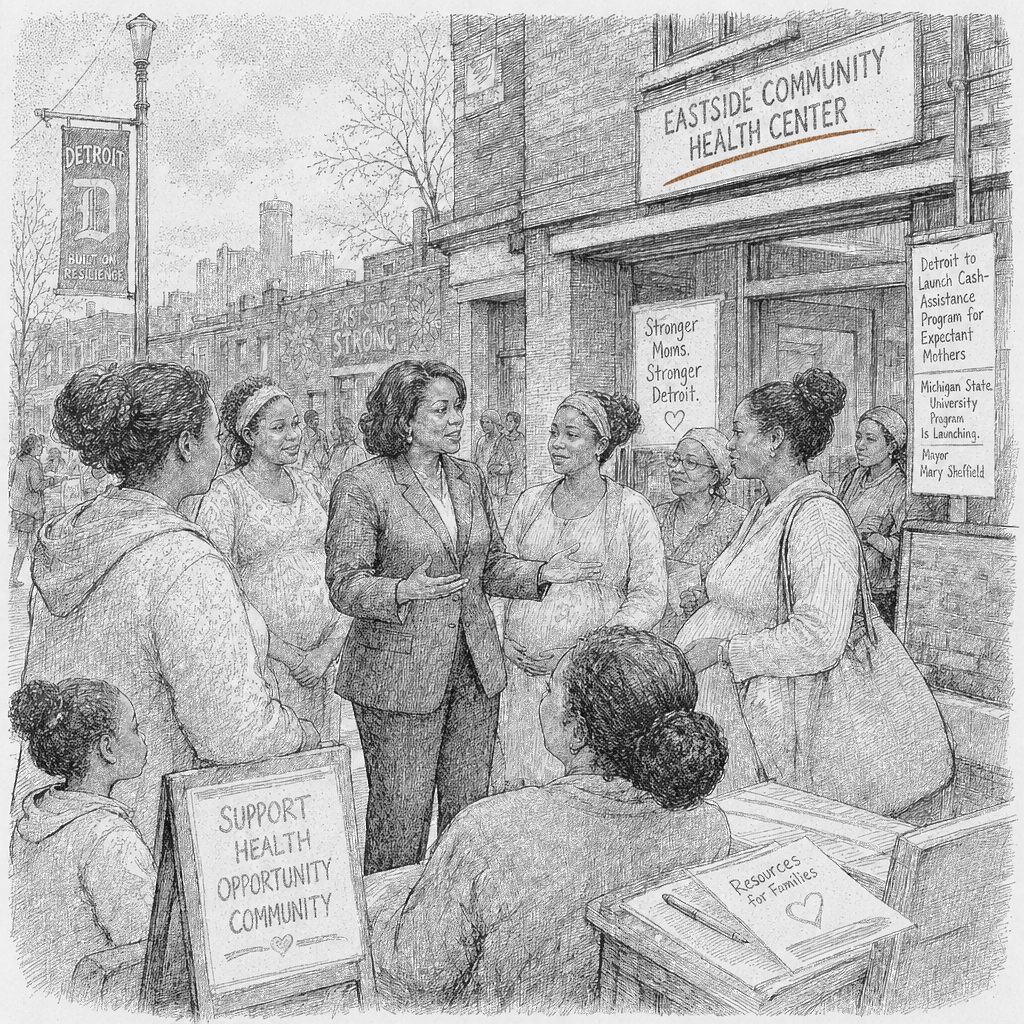
Sheffield, elected in November and installed last week as Detroit’s first female mayor, made the announcement alongside about a half-dozen mothers and a dozen young children. She said roughly $9 million has been raised for the Detroit launch, with another $2.5 million still needed.
“Half of our children are living in poverty,” Sheffield said. “That means that too many of our children are entering life’s journey burdened by financial hardship before they even take their first steps.”
How the program works
Rx Kids provides a one-time payment of $1,500 to expectant mothers during pregnancy, followed by $500 per month throughout the child’s first six months after birth. Families are expected to use the money for rent, utilities, food, diapers, baby formula, transportation, medical care and other essentials.
The program carries no income requirements. Sign-up is online, and recipients must verify they are pregnant. Michigan State University runs the program, which is administered by a nonprofit.
A statewide expansion reaching Detroit
Rx Kids began in 2024 in Flint, Michigan, and has since expanded to 20 other cities around the state, with eight more expected to join by the end of January.
Michigan committed $250 million in its fiscal year 2026 budget for the program’s continued expansion. Detroit will contribute $500,000 annually over the next three years; additional funding comes from foundations and businesses.
Detroit’s poverty backdrop
About 34% of Detroit’s 639,000 residents live in poverty, according to census data. The city’s median household income of about $39,200 is roughly half the statewide figure of more than $72,000.
Dr. Mona Hanna, a pediatrician and associate dean of Public Health at Michigan State and the program’s founding director, described Rx Kids as a “bold public health effort to improve outcomes.”
“When our babies don’t have everything they need, that hurts them. It makes them sick,” Hanna said Monday.