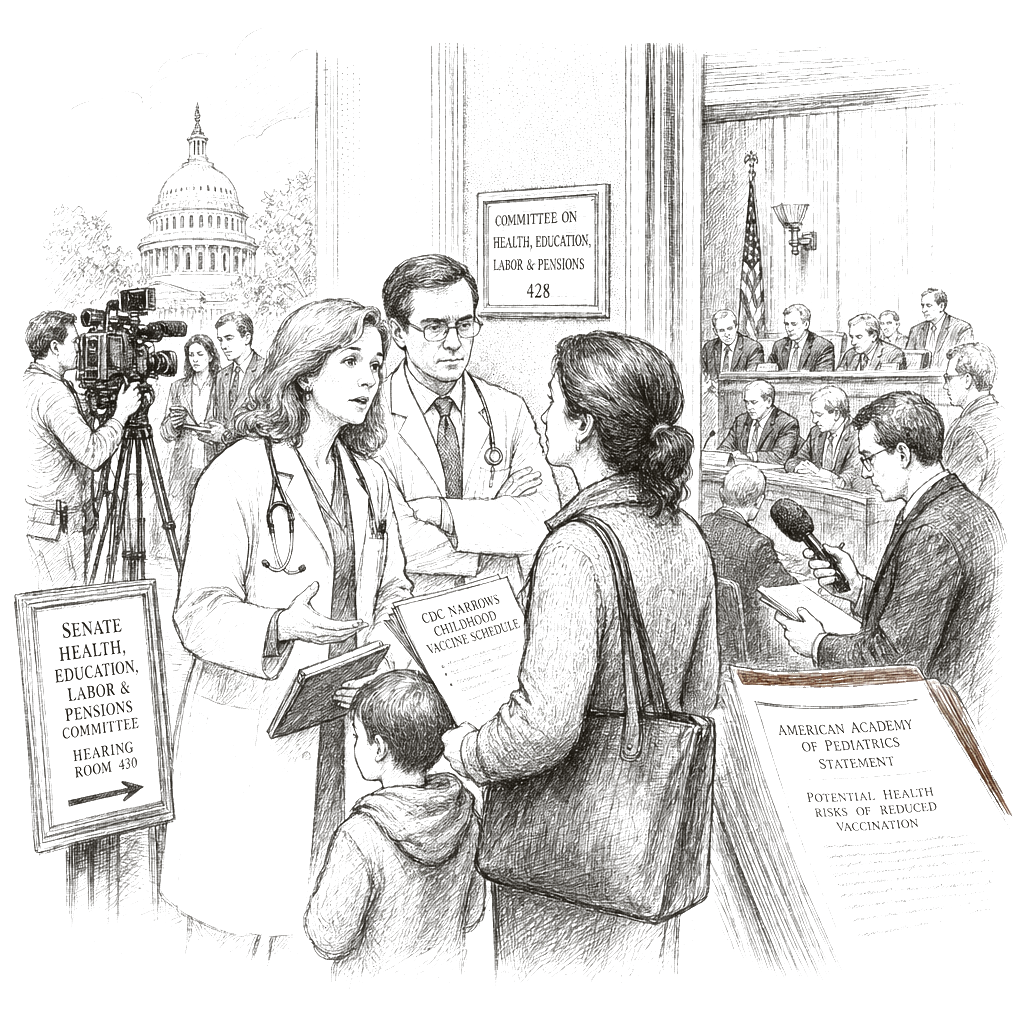
What changed
Seven vaccines that had been universally recommended for all children were moved to a “shared decision-making” category, meaning they are now advised only for children at high risk or based on individual consultations with doctors. The demoted vaccines are flu, hepatitis A, hepatitis B, meningococcal disease, rotavirus, RSV, and COVID-19, the last of which was removed from universal recommendation in 2025.
The guidance also reduced the recommended number of HPV vaccine doses from two or three shots to one, a change the Associated Press described as a surprise.
What stayed the same
Seven vaccines remained on the recommended-for-all list: measles, mumps and rubella (MMR); diphtheria, tetanus and pertussis, or whooping cough (DTaP); polio; chickenpox; HPV with the revised one-dose guidance; Hib, or Haemophilus influenzae type B; and the pneumococcal conjugate vaccine (PCV).
Why officials made the changes
HHS said its comparison to 20 peer nations found that the U.S. was an “outlier” in both the number of vaccinations and the number of doses it recommended to all children. Agency officials framed the revision as a way to increase public trust by recommending only the most important vaccinations.
The AP reported, however, that many European countries recommend some of the vaccines the U.S. removed from its universal list.
What doctors say
The American Medical Association and the American Academy of Pediatrics said they will continue to recommend the vaccines the Trump administration demoted. Both organizations said there was no new science that warranted the changes and no evidence that the previous U.S. vaccine schedule harmed children.
Dr. Sean O’Leary of the American Academy of Pediatrics said the changes “could increase child illness and death from preventable disease.” O’Leary voiced particular concern about removing the flu vaccine recommendation for children at a moment when the current flu season is becoming severe, following last winter’s particularly harsh season.
What the changes mean for families
It is not yet clear how the federal revision will affect what happens in doctors’ offices, given that the American Academy of Pediatrics has issued its own child vaccine recommendations that contradict the new federal guidance. Medical specialists said that when the federal government does not explicitly recommend a shot, it raises questions among parents and leads to more difficult conversations in clinical settings.
If fewer children are vaccinated as a result, disease outbreaks that had been historically suppressed by high vaccination rates could spread more widely, leading to more illness and missed school and work, specialists said.
HHS said insurance coverage will continue for families who still want the demoted shots. States, not the federal government, hold legal authority over vaccination requirements for schoolchildren. While CDC recommendations often influence state regulations, the AP reported that some states have begun forming their own alliances to counter the Trump administration’s vaccine guidance.