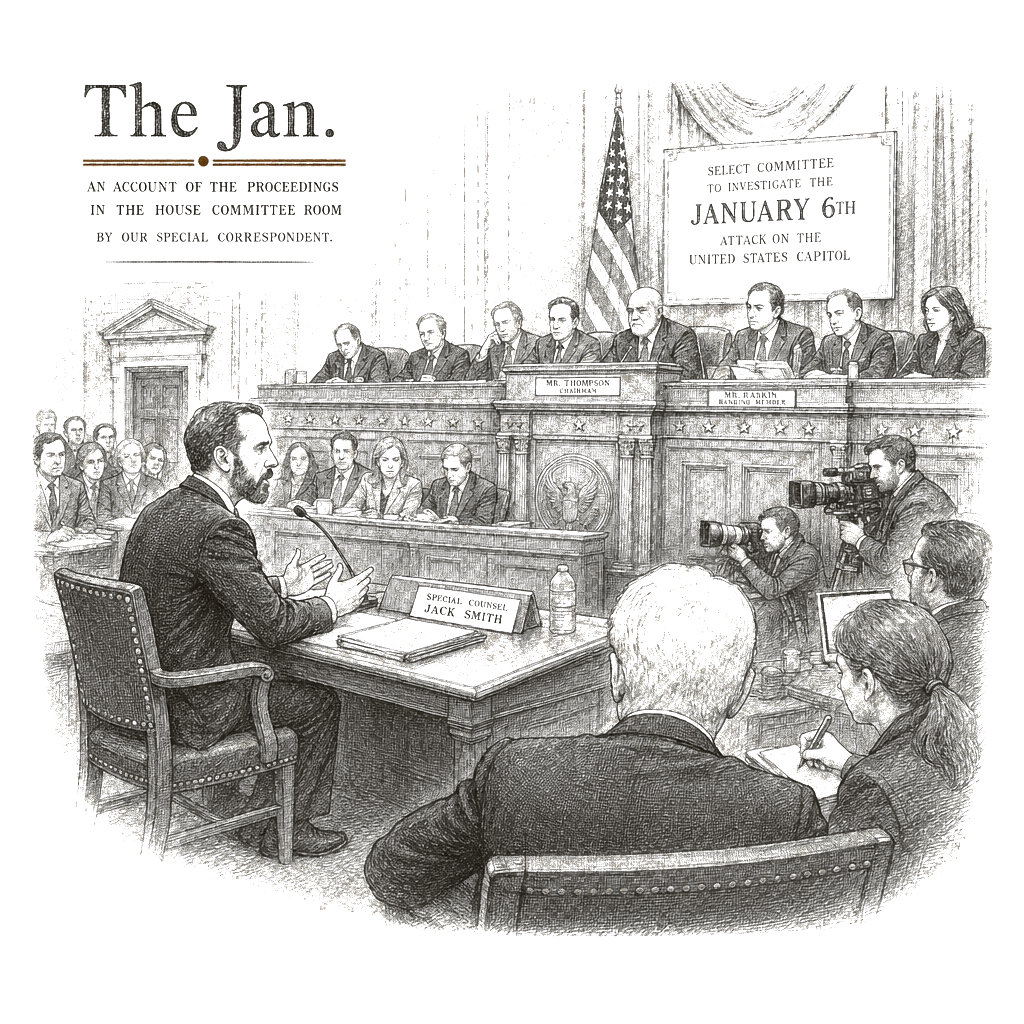
The transcript and video of former special counsel Jack Smith’s closed-door interview with the House Judiciary Committee portray a central claim prosecutors made in their Jan. 6 case: that Donald Trump’s actions and efforts to reverse the 2020 election created the conditions for the Capitol attack. In the deposition released by the committee, Smith said the riot “does not happen” without Trump, and he framed Trump as the leading figure in what prosecutors characterized as a criminal effort to overturn the election results.
Smith made the comments during a Dec. 17 deposition conducted privately, despite the former special counsel’s request to testify publicly. The committee released the transcript and video as Smith’s first appearance on Capitol Hill since he left the special counsel role last January, adding, according to the release, to the public understanding of the decision-making behind two Justice Department investigations in recent history.
In the interview, Smith pushed back on Republican suggestions that his investigations were politically motivated. Smith said Trump was “the most culpable and most responsible person” in the “criminal conspiracy to overturn the results” of the 2020 election, and he argued that the Capitol attack “does not happen without him.” He also rejected a characterization that the work was intended “to hamper” Trump’s return to the presidency in 2024, telling lawmakers, “So in terms of why we would pursue a case against him, I entirely disagree with any characterization that our work was in any way meant to hamper him in the presidential election.”
Smith described his view of the strength of the evidence in the Jan. 6 investigation, saying the case relied in part on testimony from Trump allies and supporters who cooperated with investigators. He pointed to testimony from a Pennsylvania elector—described as a former congressman—who, Smith said, said the efforts being made were an attempt to overthrow the government and were illegal. Smith told lawmakers the accounts from Republicans who were willing to oppose the falsehood that the election had been stolen—“even though it could mean trouble for them”—created what he described as “the most powerful” evidence against Trump.
On the Capitol riot itself, Smith said the evidence showed Trump “caused it,” “exploited it,” and that the attack was “foreseeable” to him. Smith also addressed whether prosecutors had evidence that Trump instructed supporters to riot at the Capitol, saying that in the weeks leading to Jan. 6 he had “people to believe fraud claims that weren’t true.” He added that he believed Trump directed supporters to the Capitol after inviting them, and that once the violence began, Trump “refused to stop it.”
Smith further described what he said were Trump’s public statements and actions around Jan. 6, including references to a tweet Smith said he believed endangered the life of Trump’s vice president. Smith also told lawmakers that, during the violence, Trump had to be pushed repeatedly by his staff members to do anything to quell it.
The deposition included discussion of investigative steps tied to phone records of Republican lawmakers in contact with Trump during Jan. 6. Smith defended the approach, saying the records involved were directly tied to Trump’s direction of co-conspirators to call the members who were contacted to delay proceedings, and he said investigators would have sought toll records for Democrats if Trump had instead directed calls to Democratic senators. Smith also discussed communications between Trump and Republican supporters in Congress, including his account of an interview his office did with Mark Meadows and the mention, in that interview, of then-Rep. Jim Jordan’s contact with the White House.
The committee questioned Smith about how his investigators evaluated claims made by former White House aide Cassidy Hutchinson. Smith told lawmakers investigators interviewed the officer who was in the car with Hutchinson’s account and that the officer’s version of events “was not the same as what Cassidy Hutchinson said she heard from somebody secondhand.”
The deposition also revisited the scope of Smith’s prosecutions against Trump. Trump had been indicted in charges related to conspiring to undo the 2020 election he lost to Democrat Joe Biden and on a separate matter involving classified documents Trump retained at his Mar-a-Lago estate. Those cases were abandoned after Trump’s 2024 election win, with Smith citing Justice Department policy against indicting a sitting president.